
Reviewed · GRANADA CATHEDRAL & ROYAL CHAPEL
Granada: Royal Chapel and Granada Cathedral Guided Tour
Granada hides its Christian power in plain sight. This afternoon walking tour takes you from Plaza Isabel la Católica to Granada’s Cathedral and the Royal Chapel, with a guide who focuses on art and architecture, not just dates. You’ll see how the city’s religious story changed over time, all in the space of a short outing.
I love that the tour gets you inside both big-ticket monuments: the Royal Chapel and the Granada Cathedral, with admission included. I also like the way the visit is framed around the buildings themselves, from the façade and interiors to the Royal Chapel’s design and the tombs associated with the Catholic Monarchs.
One consideration: the audio setup can be hit-or-miss. The instructions recommend bringing your own headset, and a couple of people noted losing signal during the tour, so don’t rely on the device alone.
In This Review
- Key takeaways for this Granada guided tour
- Why this Cathedral-and-Royal-Chapel tour is worth your afternoon
- Meeting point and the walk you’ll actually do
- Royal Chapel: the mausoleum next to the Madraza
- Church of Sagrario and the Madraza Palace: the in-between stops
- Granada Cathedral: Renaissance ambition on a former mosque site
- What the art historian guide actually adds
- Ticket value: is $43.45 a fair deal?
- Timing and pacing: plan for real time, not just the estimate
- Audio and comfort: bring your own headset
- Practical logistics that matter on the day
- Who this tour is best for
- Should you book this Royal Chapel and Cathedral tour?
- FAQ
- Where is the meeting point for the tour?
- How long does this guided tour take?
- Is the tour offered in English?
- Are tickets to the Royal Chapel and Cathedral included?
- What sites are visited during the tour?
- What is the walking route like?
- How big is the group?
- Do I need a headset?
- Do I need to wear a mask?
- What’s included in the price, and what’s not?
Key takeaways for this Granada guided tour
- Royal Chapel in Isabeline Gothic style (1505–1517), built next to the Cathedral and the old Madraza
- Cathedral built on the site of a former mosque, tied to Isabella of Castilla
- Art-history-led pacing with time to actually look at details, not just pass by
- Small group size (max 20) makes it easier to hear and ask questions
- Bring a headset if you’re sensitive to audio quality
- English-only tour, so it’s a good fit if you want everything explained in one language
The Cathedral, the Royal Chapel and the tombs of the Catholic Kings
- Granada: Cathedral and Royal Chapel Private tour with ticket
★ 4.8 · 498 reviews - Granada: 3-Hour Cathedral and Royal Chapel Tour
★ 4.8 · 405 reviews - Granada: Cathedral of Granada Entry Ticket
★ 4.5 · 360 reviews - Granada: Cathedral & Royal Chapel Skip the Line Tour
★ 4.8 · 250 reviews
Why this Cathedral-and-Royal-Chapel tour is worth your afternoon
If your Granada plan is mostly Alhambra and Generalife (totally fair), this tour is the good counterweight. It takes you into the Christian side of the city without feeling like you’re stuck in a lecture hall. You’ll walk through streets that sit right beside the monuments, then step into interiors that explain the “how” and “why,” not just the “what.”
What makes it click is the pairing. The Royal Chapel and the Cathedral sit so close that you can compare styles and intentions in one outing. One place screams royal burial and religious symbolism. The other is the monumental statement of a Renaissance-era Christian rebuild on top of an earlier mosque site. Together, they give you a more complete Granada story.
Also, it’s efficient. This is built for a short visit—about 1 to 2 hours—and you’re back at the starting square at the end. That matters when you’re trying to pack a few smart hits into a limited time window.
Meeting point and the walk you’ll actually do
You meet in Plaza Isabel la Católica in central Granada, in the afternoon. From there, you proceed on foot to the Cathedral to start the architecture-focused part of the visit, then you continue nearby on the walking route that ties the monuments together.
That start location is useful because you’re not stuck on the edges of town. It also sets expectations: this is not a ride-and-point tour. You’re on your feet, looking up at façades, then stepping inside for the real payoff.
It’s also a small group experience: the tour caps at 20 people. In a building like a cathedral, smaller groups tend to feel less chaotic. You can pause for details instead of being pulled along every time someone turns their head.
Royal Chapel: the mausoleum next to the Madraza
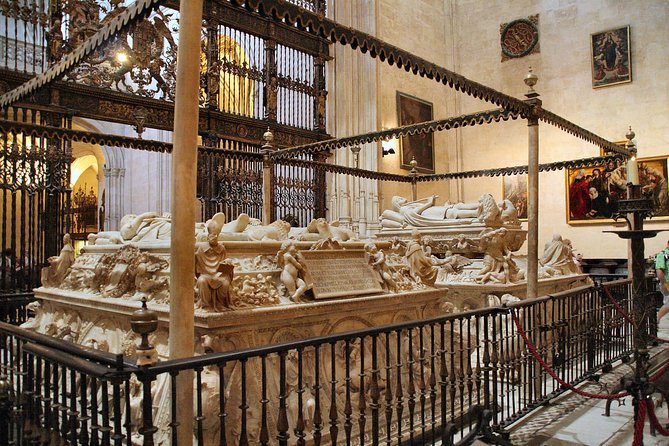
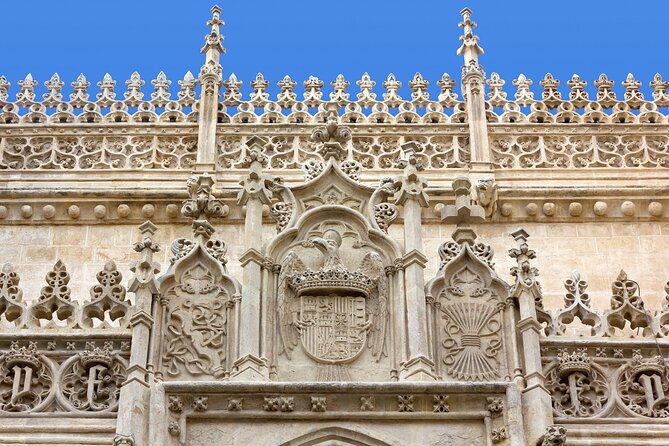
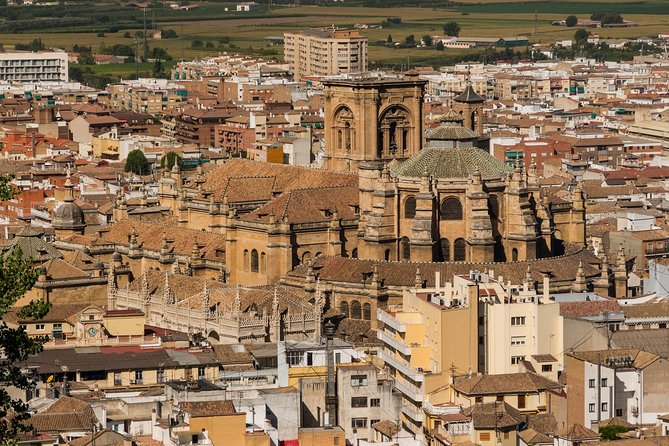
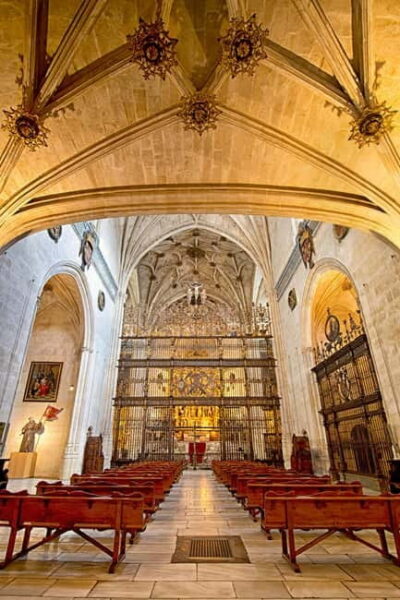
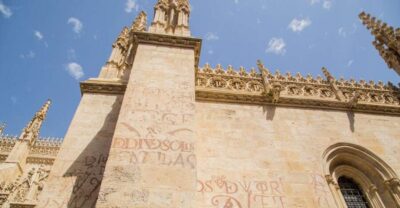
The first stop is the Royal Chapel of Granada, built right next to the Granada Cathedral and the old Madraza (the former Coranic school). This is one of Europe’s large mausoleum spaces, and in this complex you can feel the message: power, faith, and permanence.
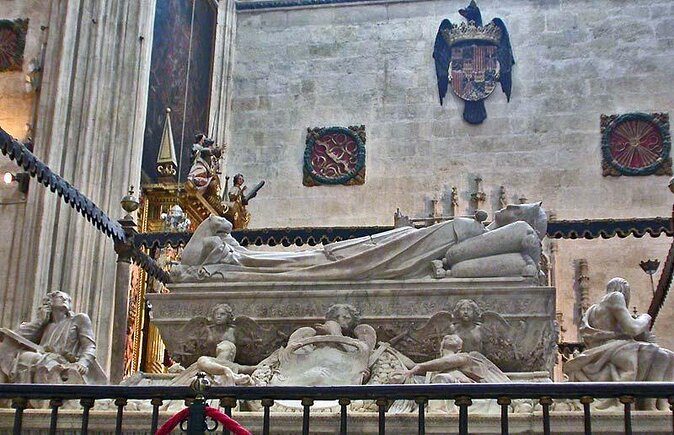
The design is often described as Isabeline Gothic, built between 1505 and 1517. Even if you’re not fluent in architectural terminology, the point lands fast: this is a royal commission with a religious purpose. The chapel is dedicated to St. John the Evangelist and St. John the Baptist, and the space is arranged to underline that sacred identity.
You’ll also get the key emotional highlight that makes the stop memorable for many people: the tombs connected to the Catholic Monarchs. One of the big reasons to do this tour is that you’re not just standing in front of stone; you’re given context for why those tombs matter, what they represent, and how that fits into Granada’s shift in religious power.
Practical tip: give yourself permission to slow down here. The chapel is compact compared with the Cathedral, but it’s dense with meaning. If you rush, you’ll miss the “pattern recognition” moment—where you start seeing how the whole building is working on you, visually.
Church of Sagrario and the Madraza Palace: the in-between stops
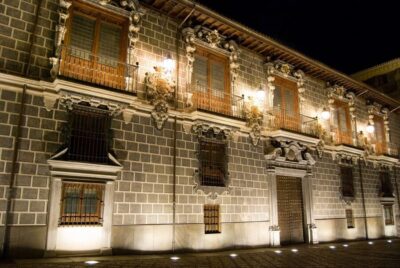
Between the Royal Chapel and the Cathedral, the route includes two additional sites: the Church of Sagrario and the Madraza Palace. Even if these are shorter stops, they’re valuable because they help you read the complex as a whole, not as separate attractions.
The Madraza connection is especially interesting because it points to the layers of Granada’s past. This wasn’t just a “mosque then cathedral” story in a straight line. It was a whole educational and religious ecosystem, and the guide’s job is to help you see the continuity and the change.
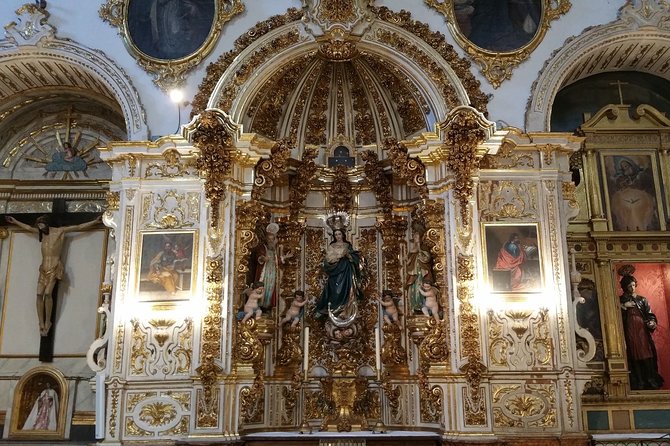
At the Church of Sagrario, you’re looking at another Christian monument within the Cathedral complex orbit. The payoff here is less about one single “wow” object and more about learning how religious spaces were arranged and used around the main Cathedral axis. If you like iconography and the way religious art communicates, this part is often the glue that makes the rest of the tour click.
In short: these stops can feel like the set-up for the main event. But that’s exactly why they’re worth including. They keep you from treating the Cathedral like an isolated masterpiece.

Granada Cathedral: Renaissance ambition on a former mosque site
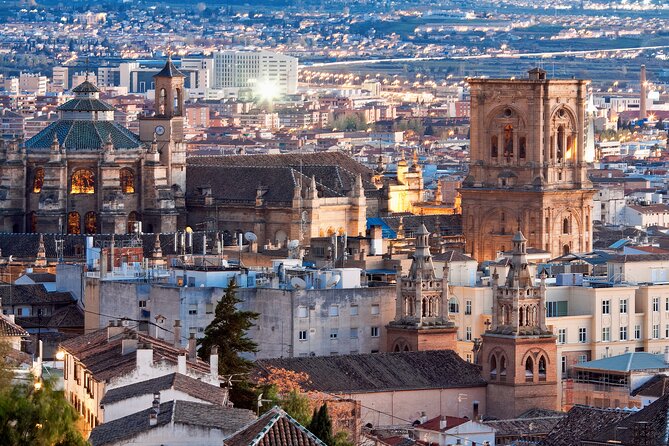
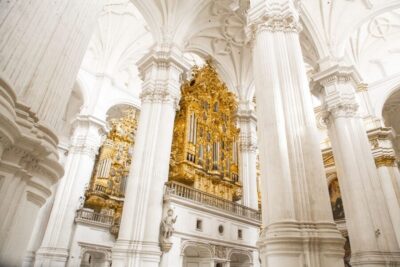
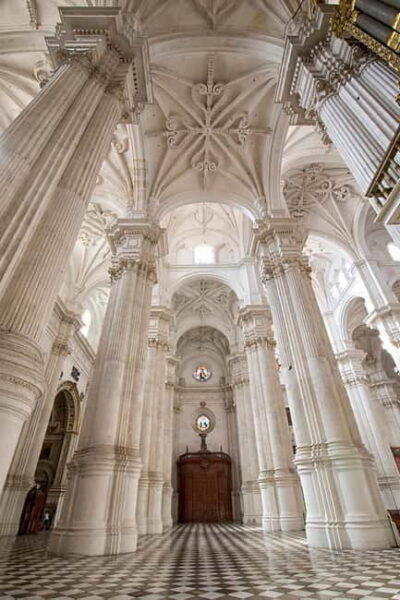
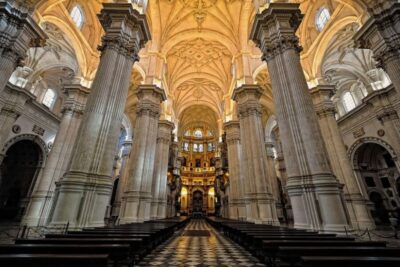
The second major stop is the Granada Cathedral, with about 1 hour on-site and admission included. This is where the tour shifts from royal burial symbolism to the city’s grand statement of Christian power.
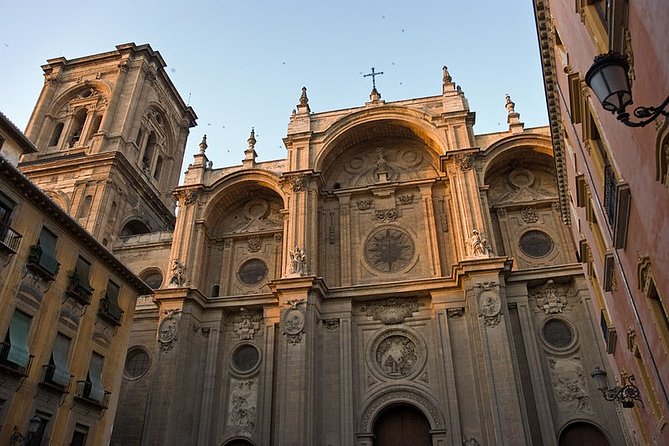
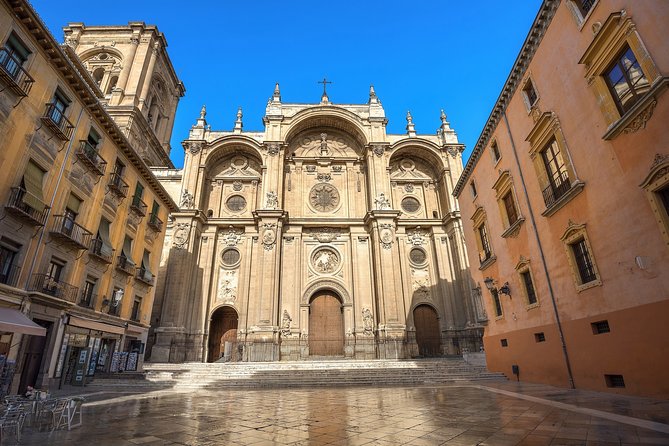
The Cathedral was erected on the site of the city’s main mosque, on behalf of Isabella of Castilla. It’s also described as one of the first Renaissance constructions of Spain. That’s a big claim, and a good guide helps you understand what it means in real terms—how style, authority, and time periods show up in stone.
What you’ll do here is mostly look and learn:
- You’ll see the façade and talk through Spanish Renaissance design ideas.
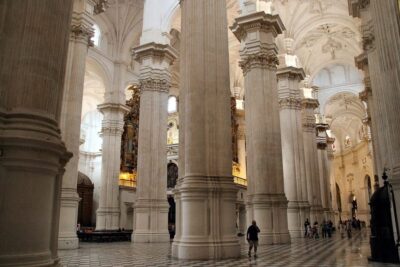
- You’ll move through the interior with explanations aimed at helping you connect iconography and architectural choices to the broader story.
If you’ve only ever seen Granada as the Alhambra skyline, this part gives you a different angle on the city. Instead of “last chapter of Muslim Spain,” you get the next chapter: how new rulers built visible legitimacy into the urban fabric.
Also, don’t treat “cathedral interior” as a generic label. The Cathedral here is tied to Granada’s specific transformation. When your guide connects details back to the mosque-to-church transition, it stops being just pretty and becomes meaningful.
What the art historian guide actually adds
This tour is led by a professional art historian guide, and that’s not a throwaway line. The best guides for these monuments do two jobs well: they explain the big storyline and they point out what your eyes should be seeing.
Based on the guide styles people describe, the strongest tours tend to feel like story-telling that stays grounded in architecture. Guides such as Mercedes, Estefana, Sara, Laura, Marta, Jamie, Alfredo, Christopher, and Alexandra are all mentioned as bringing clear explanations and strong art-history context. You might not get the exact same person, but the pattern matters: the tour is built for interpretation.
What I like about this approach is that it makes the buildings easier to remember later. You’re not just collecting photos. You’re collecting mental hooks: a style name, a timeline, a reason a tomb is placed where it is, and what a design element is trying to communicate.
One more small thing: several people mention the guide’s willingness to answer questions. If you tend to ask why things are built a certain way, you’ll likely enjoy this format.
Ticket value: is $43.45 a fair deal?
At $43.45 per person, this tour sits in the “reasonable for the monuments you enter” zone, especially because admission is included for both the Royal Chapel and the Granada Cathedral.
Here’s how I think about value for a tour like this:
- If you were to visit these sites on your own, you’d pay for entries anyway, and you’d still miss the architecture “translation.”
- You also get a structured route, with a guide keeping you on the right questions.
- Since the group size stays small, you get a more focused experience than the big-group alternative.
You’re paying for expert interpretation plus entry. That combination is what makes the price feel fair rather than padded.
The only time it might feel expensive is if you’re the type who doesn’t want a guided look at all. If you want freedom to wander slowly without explanations, you might prefer doing it independently. But if you like your monuments explained and tied together, this is a solid use of time.
Timing and pacing: plan for real time, not just the estimate
The tour is listed at 1 to 2 hours. In real life, that can mean you finish closer to the shorter end if you stay on rhythm, or closer to the longer end if the guide is talking through more details or if you ask questions.
A good rule: treat it like a half-to-a-bit-longer afternoon commitment, not a quick stop. When you’re in cathedrals and chapels, you can’t speed up the meaningful parts. The tour format is designed to let you look.
Also note: you start in the afternoon and return to the same meeting point. That makes it easier to schedule dinner afterward. Just don’t stack another major interior visit immediately before or after.
Audio and comfort: bring your own headset
The materials recommend you bring your own headset, and that’s smart. A couple of people reported the audio system losing signal and lacking a clear backup microphone. That’s not a reason to avoid the tour, but it is a reason to be prepared.
Practical comfort tips:
- Arrive with time to settle before you’re inside.
- Bring a small pack of essentials (water, hand sanitizer).
- If you’re hearing-sensitive, use your own headset from the start.
Because this is in churches, you’ll also want to respect quiet behavior and any space rules once you’re inside.
Practical logistics that matter on the day
You’ll get a mobile ticket. That’s straightforward, but do yourself a favor: have it ready before you meet your group.
This tour is English only, and it’s operated with one language. If you’re counting on bilingual explanations or a mixed-language group, this isn’t that style.
Group size matters too. With a maximum of 20 travelers, you’re less likely to feel lost in a crowd. It also makes it easier to hear your guide without shouting over everyone’s questions.
One more note in the info you were given: it mentions that the Alhambra requires full name, date of birth, and passport details. That requirement is specifically for Alhambra. If you’re planning to visit the palace around the same time, keep your passport info handy so you don’t get stuck at the last minute.
Who this tour is best for
This is a strong choice if you want Granada beyond the Alhambra photo. If you like architecture that tells political and religious stories, you’ll get a lot here.
It’s also a good fit if you’re visiting Granada for the first time. The tour hits the Cathedral complex and the Royal Chapel directly, so you don’t have to research your way through which sites matter most.
If you’re traveling with kids, this kind of guided route can still work, as long as the child is interested in buildings. Some people mention bringing children and enjoying the length because it didn’t drag.
On the other hand, if you hate structured tours or you want total freedom, you may find the format a little “guided.” You’ll still see a lot, but it’s not built for wandering off script.
Should you book this Royal Chapel and Cathedral tour?
Yes, if you want your time in Granada to feel connected. For the money, you get entry to two of the city’s most important Christian monuments and a guide who ties design and symbolism to real changes in Granada’s past. The Royal Chapel stop is the kind of experience that sticks in your brain, especially when you understand the tomb context and the Isabeline Gothic style choices.
I’d skip it only if you know you don’t want a guided interpretation or if you’re the sort who prefers to roam without explanation. Otherwise, book it as an excellent complement to your Alhambra day, and do yourself the favor of bringing a headset so the audio stays dependable.
FAQ
Where is the meeting point for the tour?
The tour meets at Plaza Isabel la Católica in Granada and ends back at the same meeting point.
How long does this guided tour take?
It runs for about 1 to 2 hours.
Is the tour offered in English?
Yes. The tour is offered in English.
Are tickets to the Royal Chapel and Cathedral included?
Yes. Royal Chapel admission and Granada Cathedral admission are included in the tour price.
What sites are visited during the tour?
You’ll visit the Royal Chapel of Granada, the Church of Sagrario, the Madraza Palace, and then the Granada Cathedral.
What is the walking route like?
It’s a walking tour through central Granada. You meet in the plaza, go on foot to the Cathedral, and continue to the nearby sites before returning to the meeting point.
How big is the group?
The tour has a maximum group size of 20 travelers.
Do I need a headset?
It’s recommended that you bring your own headset.
Do I need to wear a mask?
The tour information says you are required to wear personal masks and observe social distancing during the experience.
What’s included in the price, and what’s not?
Included: a professional art historian guide plus admission tickets for the Royal Chapel and Granada Cathedral. Not included: food and drinks, and there’s no hotel pickup or drop-off.
The Cathedral and the Catholic Kings
- Granada: Cathedral and Royal Chapel Private tour with ticket
★ 4.8 · 498 reviews - Granada: Cathedral, Royal Chapel & 5 Monuments Combo Ticket
★ 4.4 · 454 reviews - Granada: 3-Hour Cathedral and Royal Chapel Tour
★ 4.8 · 405 reviews - Granada: Cathedral of Granada Entry Ticket
★ 4.5 · 360 reviews - Granada: Cathedral & Royal Chapel Skip the Line Tour
★ 4.8 · 250 reviews
Just added to our Granada notebook
- Antequera and Torcal from Granada in a small group up to 7 people★ 4.5 · 3 reviews
- Granada: Alhambra tickets and other attractions★ 5.0 · 3 reviews
- Alhambra and Albaycin Private Tour★ 3.5 · 3 reviews
- Alhambra and Albaicin Private Tour with official Guide★ 3.5 · 3 reviews
- Cathedral and Royal Chapel Premium tour★ 4.5 · 3 reviews
Granada Cathedral & Royal Chapel, compared.
 ★ 4.8Cathedral and Royal Chapel Private tour with ticketFrom $170498 reviews
 ★ 4.4Cathedral, Royal Chapel & 5 Monuments Combo TicketFrom $42454 reviews
 ★ 4.83-Hour Cathedral and Royal Chapel TourFrom $45405 reviews
 ★ 4.5Cathedral of Granada Entry TicketFrom $11360 reviews
 ★ 4.8Cathedral & Royal Chapel Skip the Line TourFrom $42250 reviews
 ★ 4.4Royal Chapel of Granada Entry TicketFrom $1168 reviews
 ★ 4.8Cathedral and Royal Chapel Guided Tour with TicketsFrom $5023 reviews
 ★ 4.4Royal Chapel and Historical Center Walking TourFrom $3121 reviews
Browse the lists this tour appears in