
Reviewed · ALBAICíN & SACROMONTE WALKS
Granada: Historic Center and Lower Albaicin Walking Tour
Granada hits different when you walk it. This 2.5-hour tour threads Islamic Granada and the Reconquista through famous sights, then shifts into the lower Albaicín for that classic view toward the Alhambra. I love how the guide connects monuments like Corral del Carbón and the Alcaicería to what Granada became over time, and I also love the stop at Plaza Bib Rambla with the Giants Fountain and a good sense of the city’s crossroads energy. One possible drawback: you’ll be walking a lot, and the Albaicín section can be tough if you have mobility or stamina issues.
I recommend doing this early because it gives you a practical map of the old city fast. You meet your guide in the heart of Granada at the monument of Isabel La Católica and Cristóbal Colón, and the tour runs with live guidance in Spanish or English. Wear comfortable shoes, because cobbles and uneven streets are part of the deal.
If you like history that feels real instead of textbook-only, you’ll probably enjoy the way guides tell stories at each stop. In past groups, guides such as Pablo, Jaime, Anna, Emilio, and Rocío have led the walk, and the common theme is strong follow-up value: they point you toward what to see next on your own. The Alhambra viewpoint from the lower Albaicín is also a reliable payoff for the effort it takes to get there.
In This Review
- Key Points You’ll Care About
- Why This Granada Historic Center and Lower Albaicín Tour Works
- Meeting by Isabel La Católica and Cristóbal Colón: Start With the Right Orientation
- Historic Center Sights: Squares, Trade, Courts, and Sacred Buildings
- Plaza Bib Rambla and the Giants Fountain
- Corral del Carbón: A Stop That Signals Granada’s Commercial Past
- The Alcaicería and Church of Saint Ana: From Trade to Faith
- Madraza and the Cathedral: Educational and Religious Power
- Royal High Court, Royal Chancillería, and Royal Jail: Where Decisions Happened
- Lower Albaicín: Narrow Streets and That Alhambra-Forward Feeling
- The Best Payoff Stop: A Viewpoint Over the Alhambra
- What Makes the Guides Shine (and Where You Might Need Patience)
- Pace, Shoes, and Who This Tour Suits Best
- Value Check: Is $16 Really Worth It?
- How to Use This Tour to Plan Your Next Moves
- Should You Book This Granada Historic Center and Lower Albaicín Walk?
- FAQ
- How long is the Granada Historic Center and Lower Albaicín Walking Tour?
- How much does the tour cost?
- Where is the meeting point?
- What languages are available for the live guide?
- What should I bring for the tour?
- Is the tour suitable for people with mobility impairments?
- What will I see during the walk?
- Is there an Alhambra viewpoint included?
- Is there free cancellation?
- Can I reserve without paying right away?
Key Points You’ll Care About
- Local guide storytelling ties monuments to Granada’s Islamic heritage and 1492
- Lower Albaicín lanes feel Moorish in scale and pace
- A dedicated photo stop for the Alhambra from below
- Historic center highlights include Corral del Carbón, the Alcaicería, and Plaza Bib Rambla
- Stops cover major civic and religious landmarks, not just pretty streets
- Good value at $16 with a lot packed into 2.5 hours
More walks through the Albaicin lanes and up to Sacromonte
- Granada: Albaicín and Sacromonte Guided Sunset Walking Tour
★ 4.9 · 2,962 reviews - Sacromonte: Flamenco Show at Cuevas Los Tarantos Tickets
★ 4.5 · 2,051 reviews - Granada: Flamenco Show in Albayzín – Jardines de Zoraya
★ 4.7 · 1,375 reviews - Albaicin & Sacramonte Electric Bike Tour in Granada
★ 5.0 · 1,044 reviews
Why This Granada Historic Center and Lower Albaicín Tour Works
This tour is built for efficient first-time orientation. In just 2.5 hours, you get the “what is this place?” feeling for Granada’s center and the “how does this neighborhood breathe?” experience of the lower Albaicín.
The big win is that it’s not only about looking at monuments. You also learn why key buildings matter, especially how Granada’s multicultural layers show up in street life, architecture, and power centers.
For $16 per person, you’re basically paying for two things that are hard to DIY on your own: a human guide who can connect the dots, and a structured route that gets you to high-impact stops without overthinking it.
Meeting by Isabel La Católica and Cristóbal Colón: Start With the Right Orientation
Your tour begins at a very central, easy-to-find landmark: the monument to Isabel La Católica and Cristóbal Colón. I like meeting points like this because you’re not hunting for a meeting time in a maze of alleys right before you start.
From there, your guide leads you through the historic core with a plan: squares first, then the important buildings, then the neighborhood transition into the Albaicín.
If you’re the type who likes to ask questions, this is a good start. Several guides in past groups were described as friendly and responsive, and that matters because Granada rewards curiosity.
Historic Center Sights: Squares, Trade, Courts, and Sacred Buildings
The historic center portion is where you learn the city’s framework—who held power, where people gathered, and how Granada’s cultural story is written in stone.
Plaza Bib Rambla and the Giants Fountain
Plaza Bib Rambla is a smart early stop because it gives you breathing space and visual anchors. You’ll see the Giants Fountain here, and it’s the kind of landmark that helps you build a mental map of where you are.
More than the fountain itself, the guide’s explanation helps you understand the plaza as a meeting point in the city’s daily rhythm. Once you know where the plaza sits in the story, it’s easier to connect the next buildings without feeling lost.
Granada's miradores and old streets, one more loop
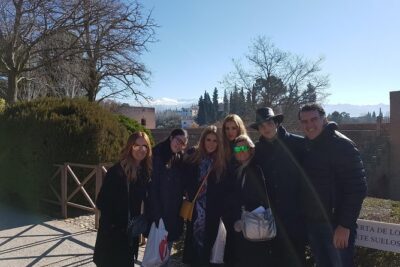
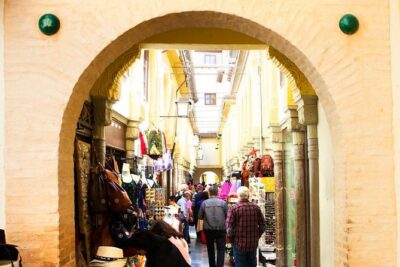
Corral del Carbón: A Stop That Signals Granada’s Commercial Past
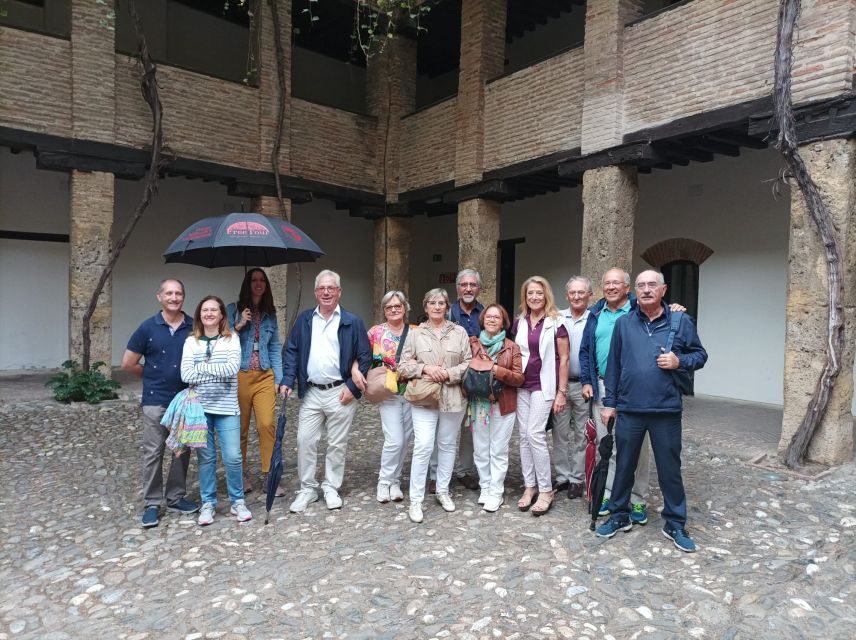
Corral del Carbón is one of the featured monuments you’ll pass through on this walk. It’s a standout because it points to Granada’s earlier days as a place of movement, trade, and exchange.
Even if you don’t know the building on sight, the guide’s job is to make it legible. You learn how it fits into the broader narrative of Granada’s Islamic heritage and the city’s transformation after the Reconquista.
The Alcaicería and Church of Saint Ana: From Trade to Faith
The Alcaicería is another key stop, and it’s especially useful on a guided route. The guide helps you see how spaces tied to commerce and everyday life connect to the cultural layers that came before and after.
You’ll also visit the Church of Saint Ana. That pairing—trade-focused spaces near a church—can be surprisingly clarifying. It shows how the city’s identity evolved without wiping the past clean.
Madraza and the Cathedral: Educational and Religious Power
The Madraza and the Cathedral show up on the walk, and the guide uses them to explain Granada’s changing timeline. You’re not just collecting names; you’re learning what these institutions represented in their era.
This is one of the best ways to grasp why 1492 is such a big turning point. The tour framework places that moment in context so it doesn’t feel like a random date you memorized and forgot.
Royal High Court, Royal Chancillería, and Royal Jail: Where Decisions Happened
Several stops focus on civic and legal institutions: the Royal High Court, the Royal Chancillería, and the Royal Jail. I found this part helpful because it explains how city power was organized, not only how it was decorated.
When a guide connects these sites to the story of Granada’s transition, the buildings start to feel like roles in a play. You can almost imagine the decision-making behind the walls, which makes the architecture easier to remember.
Lower Albaicín: Narrow Streets and That Alhambra-Forward Feeling
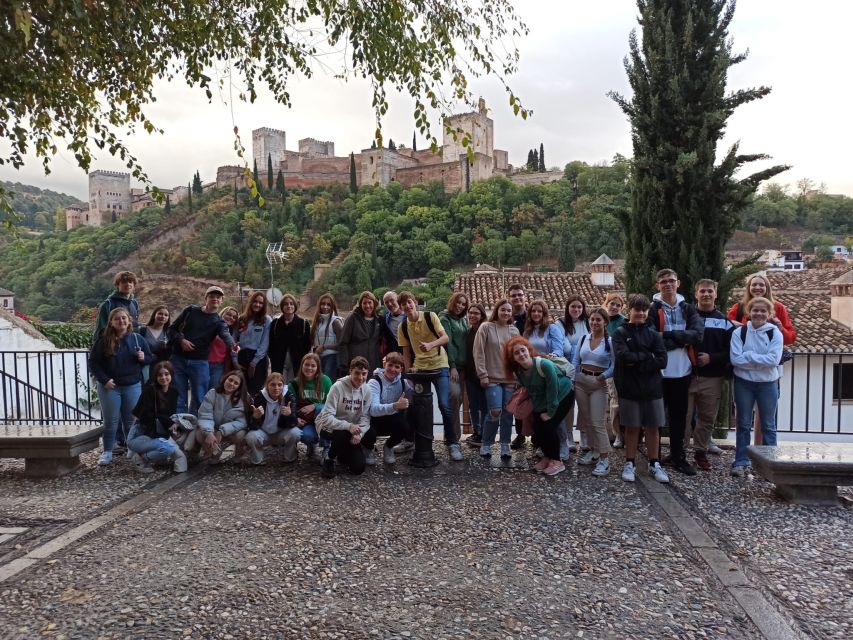
Once you shift into the lower Albaicín, the atmosphere changes. The streets tighten, the lanes curve, and the neighborhood feels like it’s designed for slow wandering. This is where you’ll get the “memories of a Moorish past” feeling, because the street pattern does a lot of the storytelling.
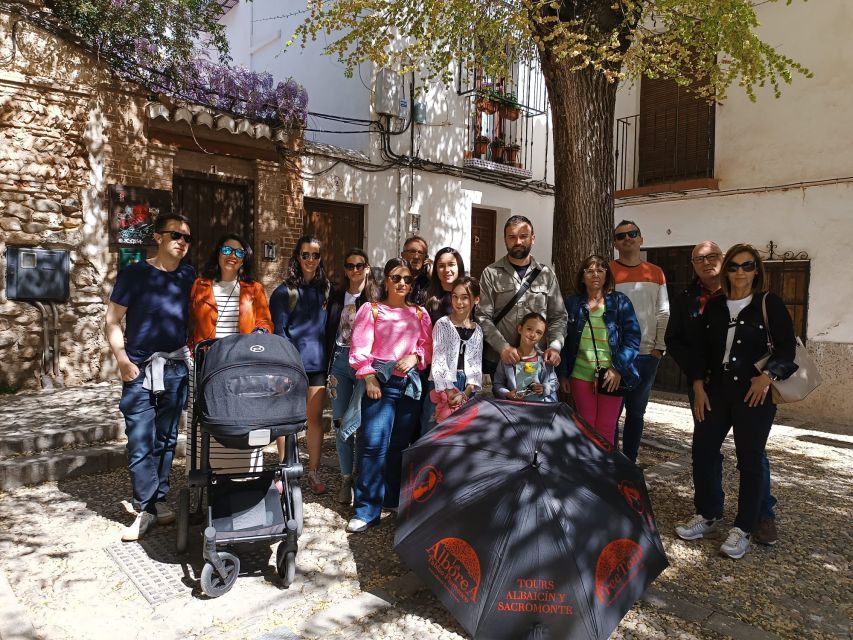
Expect charming, narrow paths and frequent photo moments as you look back toward the Alhambra area. The guide’s commentary here tends to focus on Granada’s historic and Islamic heritage through everyday details, not just big monuments.
A practical note: this portion can involve a walk-up. In past groups, some people mentioned struggling with health issues like knee problems or angina during the climb. If that sounds like you, take it slow and plan for short breaks if needed.
The Best Payoff Stop: A Viewpoint Over the Alhambra
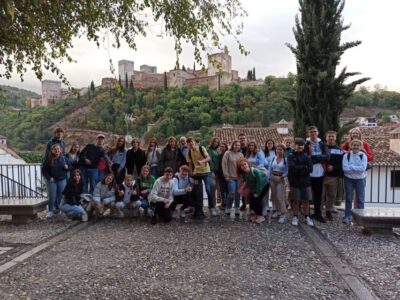
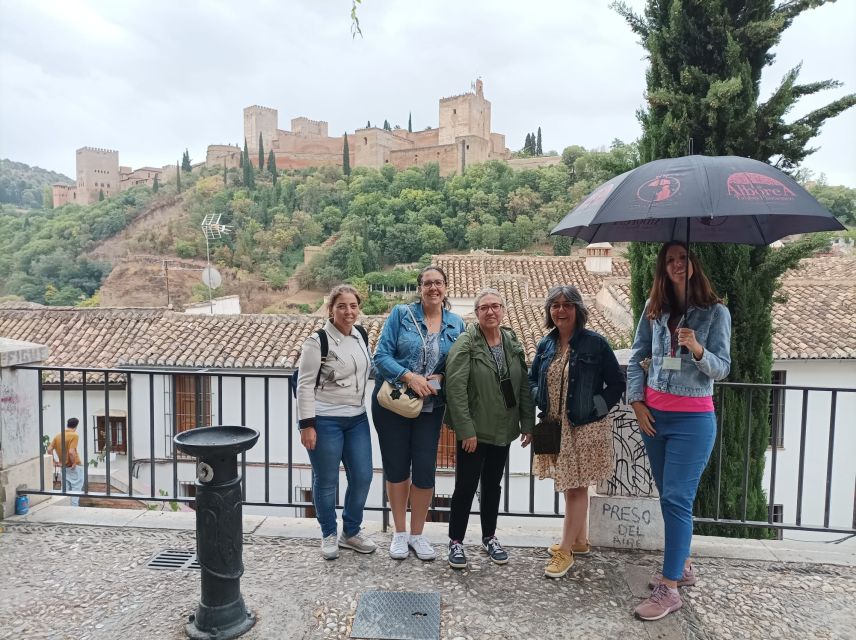
You’ll stop at a viewpoint of the Alhambra, and it’s described as a perfect spot for photos. I like viewpoint stops like this because they create a clear before-and-after moment: you’re no longer only learning monuments, you’re seeing how they relate to the surrounding city.
From the lower Albaicín, the Alhambra feels both iconic and reachable, which is great if you’re planning a separate Alhambra visit later. Even if you already have tickets or a plan, this viewpoint gives you a strong visual reference for orientation.
What Makes the Guides Shine (and Where You Might Need Patience)
The tour lives or dies by the guide, and the standout pattern in past groups is strong energy plus solid explanations.
Guides like Pablo and Jaime have been highlighted for being friendly and entertaining while still packing in details. Anna and Emilio were praised for organization and helping people ask questions and get answers. Several comments also mention guides giving recommendations for what to follow up with after the walk, including where to eat and what else is worth visiting.
There’s also one realistic caution. A couple of groups noted that English could be harder to follow due to a strong accent. If you’re sensitive to accents or fast speech, I’d come prepared to ask for clarification when you need it.
Pace, Shoes, and Who This Tour Suits Best
This is a walking tour, and the official guidance is simple: bring comfortable shoes. That’s not just etiquette; it’s your comfort insurance on cobblestones and uneven ground.
The tour is also not suitable for people with mobility impairments. That fits with the Albaicín section and the general street conditions in the historic center.
Who it suits best:
- First-time visitors who want a fast sense of Granada’s layout
- People who enjoy monuments plus explanations about historical transitions
- Anyone who likes photos but also wants the story behind them
If you want a very relaxed, flat stroll, this may feel like hard work. If you’re okay with steady walking and changing elevations, it’s a great fit.
Value Check: Is $16 Really Worth It?
Let’s be practical. For $16 per person, you get a live guide plus a route that covers a lot of major anchors in Granada’s center: Plaza Bib Rambla, Corral del Carbón, the Alcaicería, key religious sites, and major civic buildings. Add the lower Albaicín streets and the Alhambra viewpoint, and you’re getting two distinct experiences for one price.
The value gets even better if you’re spending your days actively sighting and you don’t want to waste time figuring out what to see first. One of the clearest strengths from past guidance is that it helps you get your bearings and see a lot quickly, so you can make smarter choices later.
How to Use This Tour to Plan Your Next Moves
I love using a tour like this as a baseline. After you finish, you’ll know where the historic center feels most connected, and you’ll understand which names are worth prioritizing next.
When the guide finishes strong on the story, you can do better on your own:
- Go back to the plazas and streets you remember most
- Revisit the Alhambra angle from a viewpoint you liked
- Pick which of the major buildings you want to spend time inside based on what the guide highlighted
Also, don’t be shy about questions while you’re walking. Past groups were clear that guides answered everything from architecture questions to practical tips.
Should You Book This Granada Historic Center and Lower Albaicín Walk?
Book it if you want a structured, affordable way to understand Granada quickly. This is a strong choice for first-time visitors, history-lovers, and anyone who values a good Alhambra viewpoint without paying full-day tour prices.
Skip it if you need a low-effort route, have significant mobility limitations, or know you struggle with uphill walking on uneven ground. The Albaicín stretch is the part most likely to test you.
If you’re flexible, you’ll come away with a clearer sense of Granada’s layers—trade, faith, courts, and the long transition toward 1492—plus a memorable photo angle of the Alhambra from the neighborhood level.
FAQ
How long is the Granada Historic Center and Lower Albaicín Walking Tour?
The tour lasts 2.5 hours.
How much does the tour cost?
It costs $16 per person.
Where is the meeting point?
Meet your guide in front of the monument of Isabel La Católica and Cristóbal Colón.
What languages are available for the live guide?
The tour is offered in Spanish and English.
What should I bring for the tour?
Wear comfortable shoes.
Is the tour suitable for people with mobility impairments?
No, it is not suitable for people with mobility impairments.
What will I see during the walk?
You’ll see stops in Granada’s historic center and the lower Albaicín, including places such as Corral del Carbón, the Alcaicería, Plaza Bib Rambla (with the Giants Fountain), the Church of Saint Ana, the Madraza, the Cathedral, and Royal Chancillería and Royal Jail, plus a viewpoint of the Alhambra.
Is there an Alhambra viewpoint included?
Yes. The tour includes a viewpoint of the Alhambra for photos.
Is there free cancellation?
Yes, you can cancel up to 24 hours in advance for a full refund.
Can I reserve without paying right away?
Yes, you can reserve now and pay later.
Granada on Foot, a Few More Ways
- Granada: Albaicín and Sacromonte Guided Sunset Walking Tour
★ 4.9 · 2,962 reviews - Guided Walking Tour of the Alhambra in Granada
★ 4.0 · 863 reviews - Granada: Albaicín and Sacromonte 2.5-Hour Walking Tour
★ 4.7 · 777 reviews - Granada: Albaicín and Sacromonte Walking Tour
★ 4.5 · 665 reviews - Granada’s Hidden Treasures: Albayzin and Sacromonte Walking Tour
★ 4.5 · 575 reviews
Granada's Miradores and Old Streets
- Private Alhambra Highlights Tour Including the Nasrid Palaces
★ 5.0 · 423 reviews - Granada City Center and Albaicin Private Tour
★ 5.0 · 181 reviews - Granada: Panoramic Tour by Segway
★ 5.0 · 114 reviews - Granada Highlights Tour with Tapas Breaks by Electric Bike
★ 5.0 · 111 reviews - Granada: Private Tour of Albaicín, Sacromonte and Viewpoints
★ 4.9 · 77 reviews
Up Through the Albaicin and Sacromonte
- Granada: Albaicín and Sacromonte Guided Sunset Walking Tour
★ 4.9 · 2,962 reviews - Sacromonte: Flamenco Show at Cuevas Los Tarantos Tickets
★ 4.5 · 2,051 reviews - Granada: Flamenco Show in Albayzín – Jardines de Zoraya
★ 4.7 · 1,375 reviews - Albaicin & Sacramonte Electric Bike Tour in Granada
★ 5.0 · 1,044 reviews - Granada: Albaicin and Sacromonte E-Bike Tour
★ 4.9 · 852 reviews
Just added to our Granada notebook
- Antequera and Torcal from Granada in a small group up to 7 people★ 4.5 · 3 reviews
- Granada: Alhambra tickets and other attractions★ 5.0 · 3 reviews
- Alhambra and Albaycin Private Tour★ 3.5 · 3 reviews
- Alhambra and Albaicin Private Tour with official Guide★ 3.5 · 3 reviews
- Cathedral and Royal Chapel Premium tour★ 4.5 · 3 reviews
Albaicín & Sacromonte Walks, compared.
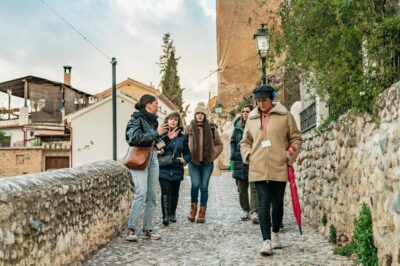 ★ 4.9Albaicín and Sacromonte Guided Sunset Walking TourFrom $172,962 reviews
 ★ 4.5Sacromonte: Flamenco Show at Cuevas Los Tarantos TicketsFrom $332,051 reviews
 ★ 4.7Flamenco Show in Albayzín – Jardines de ZorayaFrom $221,375 reviews
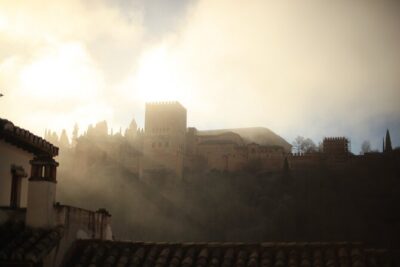 ★ 5.0Albaicin & Sacramonte Electric Bike Tour in GranadaFrom $541,044 reviews
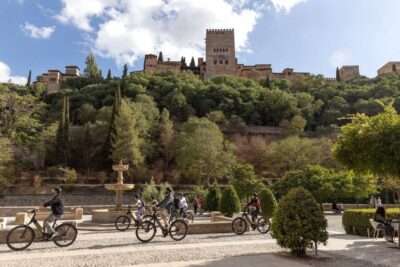 ★ 4.9Albaicin and Sacromonte E-Bike TourFrom $53852 reviews
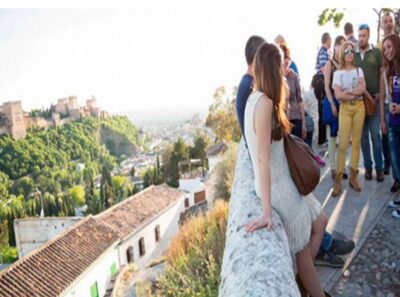 ★ 4.7Albaicín and Sacromonte 2.5-Hour Walking TourFrom $23777 reviews
 ★ 4.7Los Amayas Cave Flamenco Show in SacromonteFrom $26684 reviews
 ★ 4.5Albaicín and Sacromonte Walking TourFrom $18665 reviews
Browse the lists this tour appears in