
Reviewed · JEWISH QUARTER & CULTURES WALKS
Jewish Tour in Granada
Granada’s Jewish story hides in plain sight. This private walk ties key monuments to the Sephardic past, using outdoor stops and clear context where few physical traces survive, and it’s all led in English with pickup options.
I especially like two things: the way the tour explains Yehuda ibn Tibon as a real-life figure (not just a name on a plaque), and the built-in payoff at Mirador de San Nicolás, where the Alhambra views help you understand why this part of town mattered.
One thing to consider: this is mostly statues, plazas, and viewpoints, so if you’re craving museum artifacts only, you’ll need to bring your imagination and rely on the guide’s storytelling.
In This Review
- Key highlights at a glance
- Jewish Granada Without Museums: Why This Walk Still Feels Real
- Meeting at Plaza Nueva: Pickup That Helps (Especially on Hills)
- Stop 1: Plaza de Isabel La Católica and the Reconquista Turning Point
- Stop 2: Yehuda ibn Tibon Statue—Physician, Translator, and a Mind at Work
- Stop 3: Torres Bermejas and the Jewish Quarter’s Protective Wall
- Stop 4: Mirador de San Nicolás—Views of the Alhambra With Context
- Stop 5: Plaza Larga—An Old Square to Land the Story
- Price and Value: $383.44 for Up to 5 People
- What the Tour Style Feels Like in Real Life
- Who Should Book This Jewish Tour in Granada
- Should You Book This Jewish Granada Tour or Skip It?
- FAQ
- How long is the Jewish tour in Granada?
- What does the tour cost, and how many people can be in a group?
- Is the tour private?
- Where does the tour start, and can I arrange pickup?
- What language is the tour offered in?
- Is cancellation allowed, and how much notice do I need?
Key highlights at a glance
- Private group up to 5 so you’re not stuck in a crowd
- English-speaking guidance for a straightforward, no-fluff walk
- Yehuda ibn Tibon statue with the physician-translator story made practical
- Torres Bermejas linking the fortress line to the old Jewish quarter
- Mirador de San Nicolás for Alhambra views that sharpen the setting
- Plaza Larga for a slower, older Granada rhythm to close things out
The Realejo and the four cultures that built Granada
- Private tour: 4 cultures, Granada in depth
★ 5.0 · 39 reviews - Jewish Tour in Granada
★ 5.0 · 37 reviews - 4 neighborhoods 4 cultures. Half day private tour in Granada
★ 5.0 · 19 reviews - Half-Day Tour of Jaen, Cathedral, Jewish Quarter and Arab Baths
★ 5.0 · 10 reviews
Jewish Granada Without Museums: Why This Walk Still Feels Real
Granada can be confusing at first. You’ll see big landmark “hits,” like the Alhambra viewpoints, but the Jewish story is harder to spot because much of what once existed isn’t sitting around for you to inspect.
That’s exactly why this tour works. You start with the public spaces that frame the city’s turning points, then you move through monuments tied to Jewish life and learning. Even when there aren’t many visible remains, the tour gives you the missing links: who mattered, what they did, and how power shifts changed daily life.
If you like history you can point to with your feet—rather than history trapped behind glass—this approach is a smart fit.
Meeting at Plaza Nueva: Pickup That Helps (Especially on Hills)
The tour meets at Plaza Nueva, and you can also arrange personalized pickup and transfers. That matters more than you might think, because Granada’s topography loves a hill. Even if you’re in moderate shape, walking up and down old streets can wear you out fast when you’re also trying to pay attention to the story.
One review I read praised the guide for using taxi help to reach a higher starting vantage point, noting that walking up would have wasted time and energy. I take that as a good sign for you: the tour is designed to keep the experience smooth, not punishing.
You’re also not wandering alone. This is a private activity, so it’s just your group, and your guide can pace things based on your comfort level.
Stop 1: Plaza de Isabel La Católica and the Reconquista Turning Point
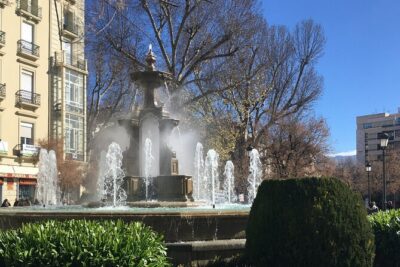
The first stop is Plaza de Isabel La Católica, centered around the statue of Queen Isabel and Christopher Columbus. It sounds like a big, general square—but the tour uses that backdrop to set up a key idea: the reconquest of Granada didn’t just change rulers. It changed culture, language, safety, and what kinds of lives were possible.
You’ll get a guided explanation that connects this moment to the wider chain of consequences across the region and beyond. The point here isn’t to memorize dates like a robot. It’s to understand why later Jewish identity in Granada had to navigate political upheaval.
This stop is short, so treat it as your “orientation brain.” Once you grasp the turning-point context, the next monuments make more sense.
Practical note: this is a public plaza, so you’re not dealing with ticket lines or controlled entry. You can simply look up, look around, and listen.
Stop 2: Yehuda ibn Tibon Statue—Physician, Translator, and a Mind at Work
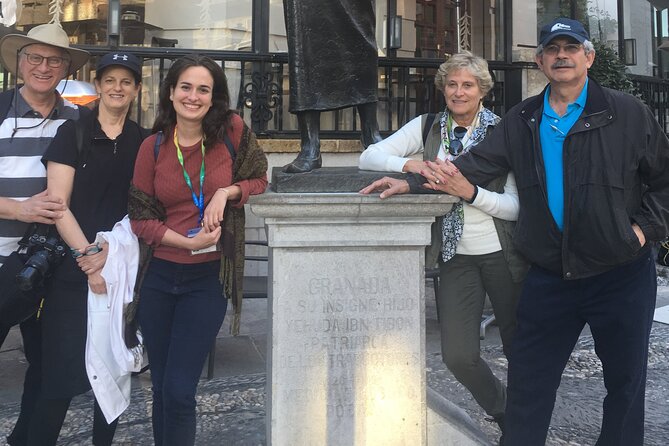
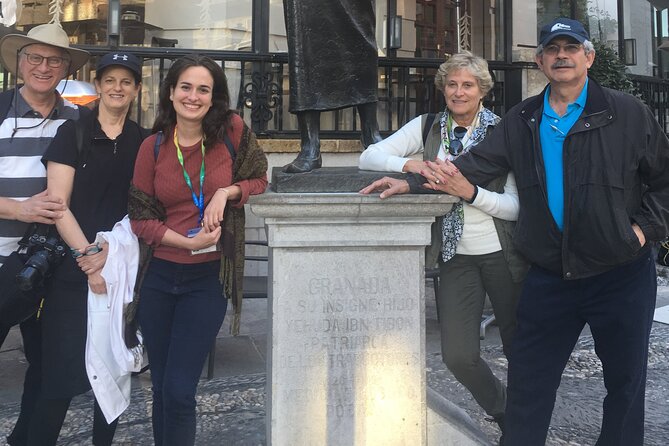
Next comes the Estatua de Yehuda ibn Tibon. This is one of those stops where a statue becomes a story you can actually picture.
Yehuda ibn Tibon is described as a Jewish physician and a translator who worked to bring Jewish Arabic-language works into Hebrew. That detail is powerful because it highlights a real-world skill: knowledge moving across languages, and learned people doing translation work that expanded what could be read and studied.
The tour doesn’t just say he existed. It frames why translating ideas mattered: it supported learning, preserved texts, and made scholarship travel between communities.
I like that this stop gives you a break from grand political narratives. Here the focus becomes human effort—how someone’s work helped people study and understand. And because the stop is only around ten minutes, it stays sharp instead of turning into a lecture marathon.
If you’re the type who enjoys a “people story” more than a “war story,” you’ll likely enjoy this stop a lot.
Stop 3: Torres Bermejas and the Jewish Quarter’s Protective Wall
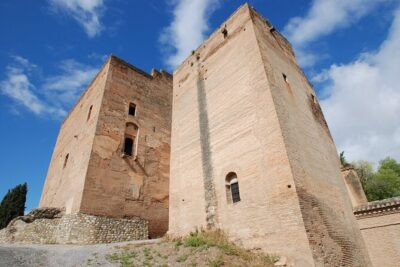
Then you head to Torres Bermejas, described as the fortress that helped protect the Jewish quarter. Fortress stops can feel a bit generic on other tours, but here it’s connected to neighborhood life rather than just military trivia.
What you want to get from this moment is the link between geography and safety. In older cities, walls and towers weren’t decoration. They were part of how power was enforced—and how communities tried to endure.
Even though the area’s visible remains might not feel like a dramatic scene from a movie, the guided explanation gives it meaning. You can imagine the quarter’s edges and how protection worked in practical terms.
This is also a helpful mental reset. After learning about translation and scholarship, you shift to daily conditions: where people lived, what boundaries shaped life, and how the city’s structure reflected control.
Stop 4: Mirador de San Nicolás—Views of the Alhambra With Context
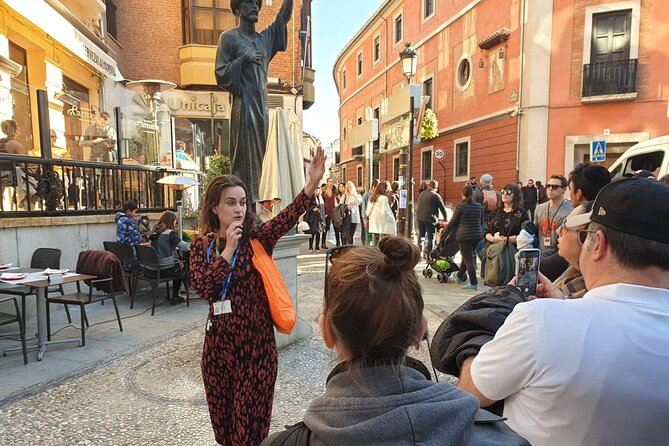
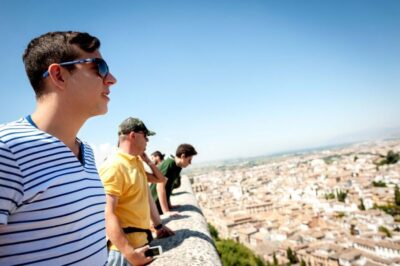
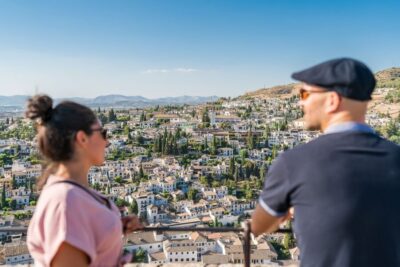
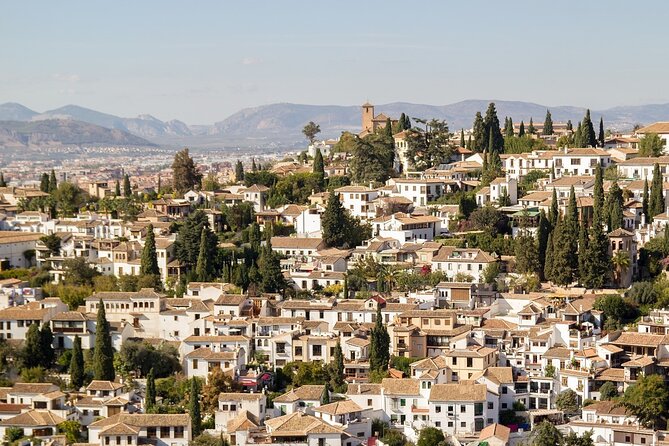
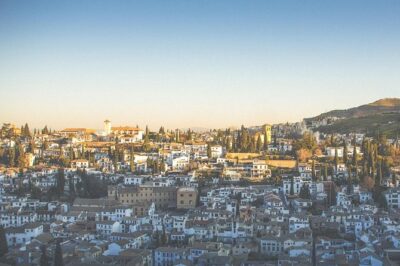
At Mirador de San Nicolás, the tour offers one of Granada’s classic payoffs: incredible views of the Alhambra. Yes, you’ll want photos. But the best part is what the viewpoint does for the whole tour.
When you see the Alhambra from here, you understand that this neighborhood wasn’t just random streets. It was built into the city’s power structure. The guide’s commentary helps tie the landscape of sightlines—what was visible, what was guarded, what dominated the skyline—to the larger story of change in Granada.
This stop runs about fifteen minutes, which is just long enough for a good look and a short rest without dragging you into “stand around forever” territory.
If you’ve visited Granada before, this perspective may still feel different. The viewpoint is familiar, but the tour gives it a new layer.
Bring a sense of calm. It’s a great moment to stop analyzing and just look.
Stop 5: Plaza Larga—An Old Square to Land the Story
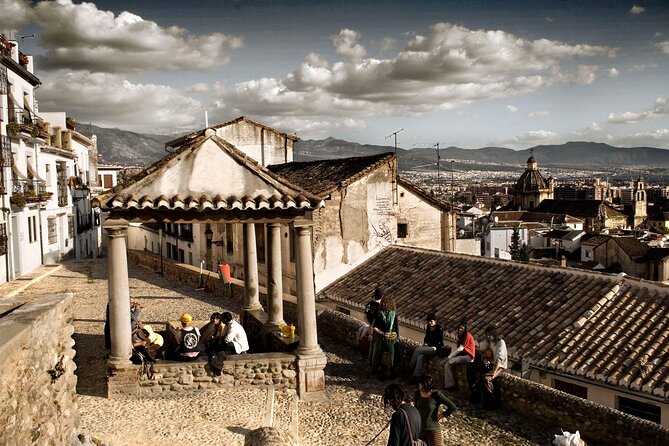
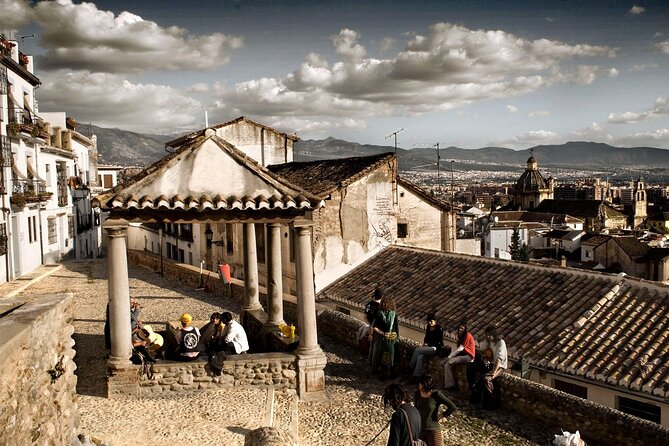
To close, you’ll visit Plaza Larga, one of Granada’s oldest plazas. It’s a fitting finale because it pulls you back into everyday city life.
After learning about power shifts, scholarship, and fortifications, standing in an older public square feels grounding. It reminds you that history isn’t only what happened at dramatic dates—it’s what shaped how people moved, gathered, and lived.
This stop is about ten minutes, so don’t expect it to be an extended reflective scene. Instead, think of it as your “wrap-up pause.” You’ll leave with a sense of place, not just a list of names.
Price and Value: $383.44 for Up to 5 People
The price is $383.44 per group (up to 5) for about 2 hours 30 minutes. For a private tour, that’s the key number to use, not the per-person math in your head.
If you can bring 4 or 5 people, it can work out to a reasonable per-person cost compared with the usual “private guide” pricing logic. If you’re traveling solo, it’s less of a bargain, but you still get two big advantages: your own group pace and pickup/transfer options.
The value also comes from the structure: short stops (mostly around 10 minutes each) and a guide who connects each location to a specific idea. That prevents the common problem with casual self-guided walks, where you stare at sights and guess what they mean.
One more plus: the stops described are public and the admission at the sites is listed as free. That helps you avoid surprise costs during the tour itself.
If you’re deciding whether to splurge, I’d focus on one question: do you want context from a guide, or do you prefer to read everything yourself? If you want the context, this group-price private format is a solid deal.
What the Tour Style Feels Like in Real Life
This isn’t a long day. It’s timed like a “smart overview” that gives you a tight storyline across the city. The pace is designed for attention, not endurance.
It also helps that the tour is private. That means questions don’t have to be rushed, and you can ask for clarification if a name or concept hits you faster than you expected.
You’ll get a mix of:
- quick monument stops tied to identity and scholarship,
- a fortress stop tied to protection and neighborhood boundaries,
- and a viewpoint stop where context meets a classic Granada panorama.
One review specifically praised the guide, Marilyn, for deep study and for bringing the story to life even without material remains to see. That matches the tour’s overall concept: when you can’t walk into the past, you listen your way into it.
Who Should Book This Jewish Tour in Granada
This tour is a good fit if you:
- want Jewish history in Granada explained through real landmarks,
- prefer a private setting over a crowded group,
- enjoy language and scholarship stories (not only politics),
- and want at least one major “photo + meaning” viewpoint at Mirador de San Nicolás.
It may not be perfect if you’re only interested in museums, artifacts, or indoor exhibitions. This experience is built around what you can see outside: statues, plazas, and the city’s structure.
And since the tour calls for moderate physical fitness, plan on some walking and potentially uneven ground. If you’re okay with that, you’ll likely enjoy it.
Should You Book This Jewish Granada Tour or Skip It?
I’d book it if you want a clear, guided way to understand Granada’s Jewish story without needing a giant time commitment or museum hunting. The private group size, English delivery, and the mix of scholarship, protection, and viewpoint context make it feel focused rather than scattered.
Skip it only if your ideal tour is heavy on indoor artifacts and long exhibit time. If you want that, you’ll be happier adding separate museum visits and pairing them with a shorter, landmark-based walk like this.
If you’re on the fence, one practical tip: book ahead. It’s often scheduled about 30 days in advance on average, which usually means spots go quickly when people plan their Granada days.
FAQ
How long is the Jewish tour in Granada?
It’s about 2 hours 30 minutes.
What does the tour cost, and how many people can be in a group?
The price is $383.44 per group for up to 5 people.
Is the tour private?
Yes. It’s a private activity, and only your group participates.
Where does the tour start, and can I arrange pickup?
The meeting point is Plaza Nueva in Granada. Personalized pickup and transfers are available.
What language is the tour offered in?
The tour is offered in English.
Is cancellation allowed, and how much notice do I need?
You can cancel for a full refund up to 24 hours in advance of the experience start time.
The Realejo and Granada's Many Faiths
- Private tour: 4 cultures, Granada in depth
★ 5.0 · 39 reviews - Private Jewish History Tour
★ 4.5 · 32 reviews - 4 neighborhoods 4 cultures. Half day private tour in Granada
★ 5.0 · 19 reviews - Half-Day Tour of Jaen, Cathedral, Jewish Quarter and Arab Baths
★ 5.0 · 10 reviews - Granada’s Realejo District: A Self-Guided Tour of the Old Quarter
★ 4.0 · 5 reviews
Just added to our Granada notebook
- Antequera and Torcal from Granada in a small group up to 7 people★ 4.5 · 3 reviews
- Granada: Alhambra tickets and other attractions★ 5.0 · 3 reviews
- Alhambra and Albaycin Private Tour★ 3.5 · 3 reviews
- Alhambra and Albaicin Private Tour with official Guide★ 3.5 · 3 reviews
- Cathedral and Royal Chapel Premium tour★ 4.5 · 3 reviews
Jewish Quarter & Cultures Walks, compared.
 ★ 5.0Private tour: 4 cultures, Granada in depthFrom $10739 reviews
 ★ 4.5Private Jewish History TourFrom $31232 reviews
 ★ 5.04 neighborhoods 4 cultures. Half day private tour in GranadaFrom $17919 reviews
 ★ 5.0Half-Day Tour of Jaen, Cathedral, Jewish Quarter and Arab BathsFrom $1710 reviews
 ★ 4.0Granada’s Realejo District: A Self-Guided Tour of the Old QuarterFrom $95 reviews
Browse the lists this tour appears in