

Reviewed · WALKING TOURS
Granada Walking Tour – The Ideal Way to Discover the City
Granada can feel like a puzzle with its pieces everywhere. This walking tour turns those pieces into a clear story fast, starting in Plaza Nueva and ending in the Albaicín. I love how the walk stitches together the city’s turning points—Moorish life, then Christian rule—without making you sit in a classroom. I also like that it stays manageable: about 2 hours 30 minutes, with only a few uphill and stair moments.
You’ll get an official guide, and mine-type experience is very question-friendly. If you’re lucky (I’ve seen it happen), a guide like Marta can explain the details in solid English and actually answer your follow-ups. The one drawback to plan around is that it’s still a city-center walk: there are some slopes and stone streets, so comfy shoes matter.
In This Review
- Key highlights worth planning for
- Granada in Two and a Half Hours: Why This Walk Works
- Plaza Nueva to Plaza de Isabel La Catolica: Getting Your Bearings and Reading the Power Shift
- Corral del Carbon and the Alcaicería: Seeing Moorish-Era Life Through Market-Era Details
- The Renaissance Cathedral Built on Former Mosque Ground—and Why That Change Matters
- The Chapel with the Catholic Monarchs’ Tombs: Spain’s Royal Story in Gothic-Style Stone
- Barrio del Albaicín Ending: Cobblestones, Whitewashed Homes, and Alhambra-View Moments
- Price, Tips, and Comfort: Getting Real Value From a Budget-Friendly Walk
- How to Plan Your Day Around the Stops
- Who Should Book This Granada Walk (and Who Might Want a Different Option)
- Should You Book This Granada Walking Tour?
- FAQ
- FAQ
- Where does the tour start and end?
- How long is the Granada walking tour?
- How much does the tour cost?
- Is the tour in English?
- Do I need to print a ticket?
- Are admissions included at the stops?
- Is tipping required?
- How big is the group?
- What is the cancellation policy?
Key highlights worth planning for
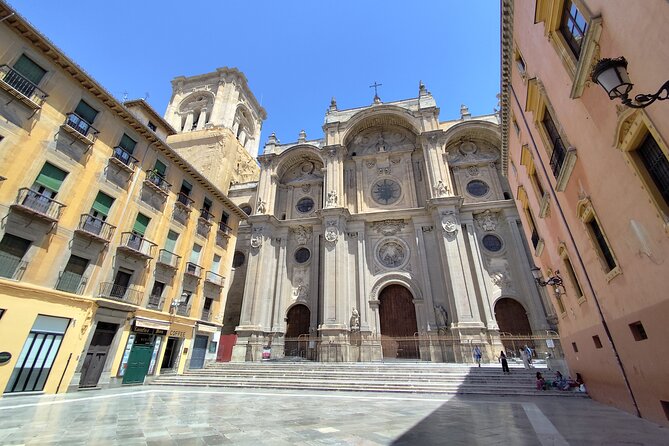
- Plaza Nueva start: You begin in a practical, lively meeting zone between the Alhambra and the Albaicín.
- Isabella and Columbus connection: The stop at Plaza de Isabel La Catolica frames Granada’s role in the story of exploration.
- Corral del Carbon insight: A preserved 14th-century Moorish space with merchant-era uses—easy to understand with a guide.
- Alcaicería market alleys: You walk the former silk-market route and see how it became a craft-and-souvenir maze.
- Mosque-to-cathedral power shift: The big Renaissance cathedral sits on older ground, and the guide helps you read that change.
- Albaicín UNESCO finish: You end in the old quarter with cobblestones, whitewashed homes, and classic Alhambra viewpoints.
Other Granada walks we have paced out on foot
- Granada: Albaicín and Sacromonte Guided Sunset Walking Tour
★ 4.9 · 2,962 reviews - Guided Walking Tour of the Alhambra in Granada
★ 4.0 · 863 reviews - Granada: Albaicín and Sacromonte 2.5-Hour Walking Tour
★ 4.7 · 777 reviews - Granada: Albaicín and Sacromonte Walking Tour
★ 4.5 · 665 reviews
Granada in Two and a Half Hours: Why This Walk Works
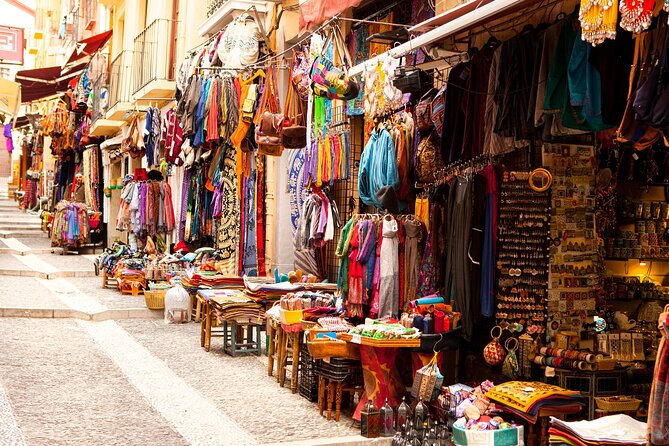
This is the kind of tour that fits real travel days. You get a focused sweep through central sights and the neighboring Albaicín, without trying to cram in the whole Alhambra at once. The structure is simple: step, listen, look around, move on.
The value isn’t only in the low entry price (it’s listed at $3.60 per person). It’s in the guide time. When someone can explain why a place looks the way it does—who used it, what it replaced, and what changed—you start noticing things you would otherwise walk past. That’s especially true in Granada, where the city layers eras on top of eras.
Also, the group size stays small enough to feel human. The tour runs with a maximum of 30 people, and there’s a minimum of 5 booked across other reservations. That usually means you can ask questions and not get lost in a crowd.
Plaza Nueva to Plaza de Isabel La Catolica: Getting Your Bearings and Reading the Power Shift
You start at Plaza Nueva, a logical launch point that sits between the historic Albaicín and the Alhambra side of town. You don’t have to hunt for the day’s “orientation spot.” You just show up at the square and go from there, which is great when you’ve got limited time and need momentum.
From the start, the tour’s biggest strength shows up: the guide helps you connect geography with history. Granada isn’t just pretty streets. It’s also a set of decisions—who controlled what, and why.
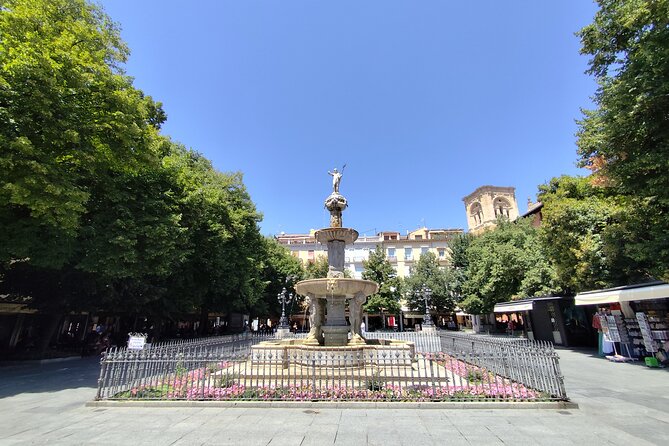
Next comes Plaza de Isabel La Catolica. This square features a monument to Queen Isabella and Christopher Columbus. It’s not there just to look impressive; it signals a major shift in Granada’s wider story—what happened when Christian rulers turned their attention outward and supported voyages to the Americas. With a guide, you see the square as a bridge between local power and global expansion.
What I like here: the tour doesn’t treat history as dates stuck on a wall. It uses obvious landmarks—plazas with symbols—to give you a mental map you’ll keep using later, even after the walk ends.
Corral del Carbon and the Alcaicería: Seeing Moorish-Era Life Through Market-Era Details
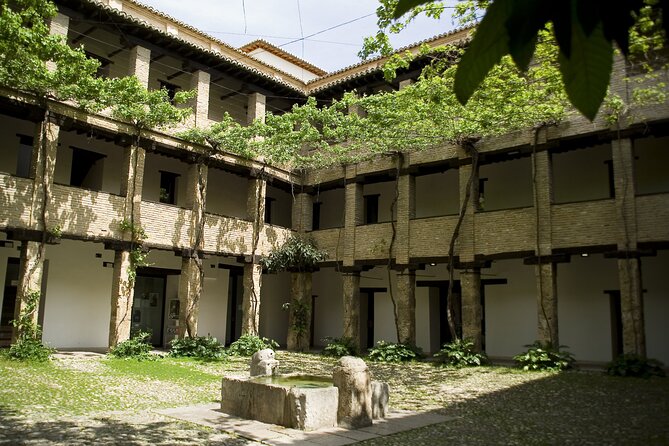
Stop three is Corral del Carbon, a preserved 14th-century Moorish building. The key word for understanding it is function. It originally served as an inn and a warehouse for merchants. That matters because it means this wasn’t just art and architecture—it was logistics, trade, and everyday movement of people and goods.
A good guide makes buildings like this feel practical. You start noticing what a space like this would need: places to handle travelers, storage needs for goods, and design choices that fit commercial life. And since Corral del Carbon is now used for cultural events and artisan shops, you get a “then and now” moment without it feeling forced.
Then the route leads you into Alcaiceria, the area that was once Granada’s silk market. In Moorish times, silk trade was a big deal, and the area’s layout reflects that old commercial purpose. Today, it’s a network of narrow alleys filled with shops—crafts, souvenirs, and local goods—so it works as both history and a real stroll.
The drawback to keep in mind: market alleys are compact, and it can feel busy in close quarters. The upside is that with a guide you’re not just shopping blindly—you’re walking a historical route and learning what it used to be before you decide what to buy.
The Renaissance Cathedral Built on Former Mosque Ground—and Why That Change Matters
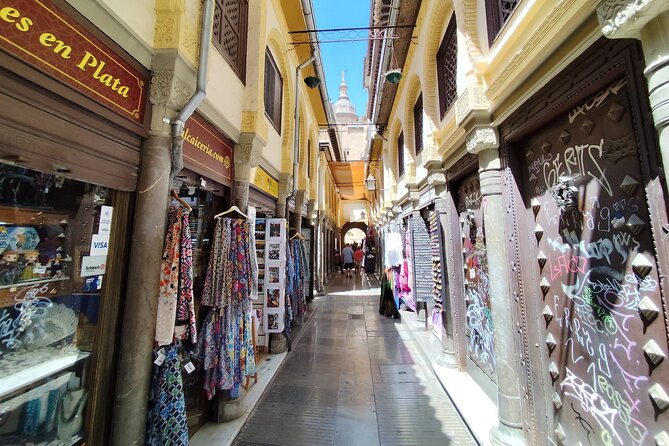
After the market stops, the tour steps into a different kind of Granada: the monumental shift from Moorish rule toward Christian dominance. The itinerary includes a grand Renaissance cathedral that was built over a former mosque. That detail is the whole point.
This is the kind of place where architecture is language. If you walk in with a guide who points out the contrast—what was reused, what was replaced, and how the style changed—you’ll understand the building as a record of conquest and transformation, not just as a beautiful interior.
The guide also helps you make sense of the scale. A cathedral like this can feel like “just another church” if you only see it from the outside. But once you’re inside (and someone explains what to look for), it becomes a clear example of how Granada’s leadership changed and how power showed up in stone.
Other ways to take in the whole of Granada

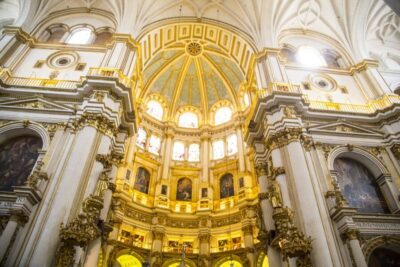
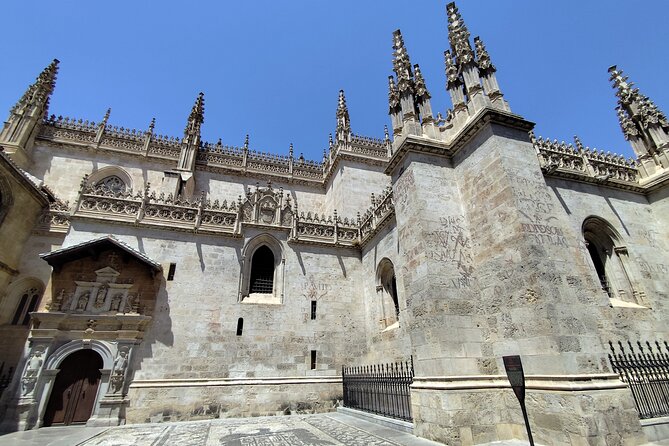
The Chapel with the Catholic Monarchs’ Tombs: Spain’s Royal Story in Gothic-Style Stone
Right adjacent to the cathedral is the chapel where the Catholic Monarchs—Isabella I and Ferdinand II—are laid to rest. The tour focuses on the elaborate Gothic structure and the ornate tombs.
This is a strong stop for two reasons. First, it makes the royal story feel tangible. You’re not memorizing names—you’re standing next to them, framed by the architecture that was meant to honor them. Second, it connects neatly back to the earlier Plaza de Isabel La Catolica moment. You start with the political symbol outside, then you end with the political reality inside.
If you care about how places represent authority—who gets remembered and how—this portion is worth paying attention to. Spend the time your guide gives you, and don’t rush it. Even short visits can feel meaningful when you know what you’re looking at.
Barrio del Albaicín Ending: Cobblestones, Whitewashed Homes, and Alhambra-View Moments
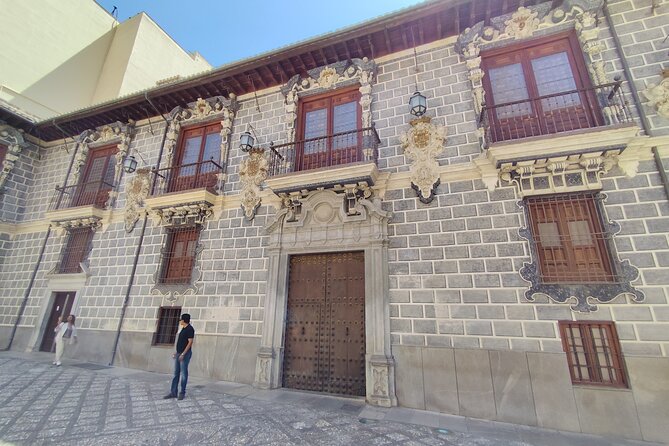
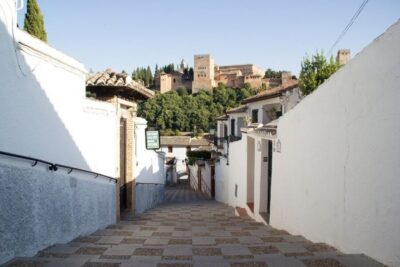
The walk finishes with Barrio del Albaicín, Granada’s oldest neighborhood and a UNESCO World Heritage Site. This is the part where the city’s look hits you fast: narrow cobblestone streets, whitewashed houses, and those classic viewpoints toward the Alhambra.
The tour doesn’t try to turn this into an hour-long photo marathon. Instead, it gives you a short introduction that helps you understand why the Albaicín feels different from the modern city center. The layout makes you slow down. The buildings pull you inward. And once you know what you’re seeing, you’re more likely to notice the charm in the details instead of just moving on to your next destination.
The tour ends near Placeta de Carvajales, about five minutes from Plaza Nueva. That ending location is handy because it drops you right into the Albaicín side of town. From there, you can keep walking at your own pace—especially if you want to chase views or grab a late snack.
Price, Tips, and Comfort: Getting Real Value From a Budget-Friendly Walk
The listed price is $3.60 per person, and the itinerary marks each stop with admission ticket free. That combination makes this a smart value option if you want guided context without paying big attraction fees.
But there’s a key detail you shouldn’t miss: tips are pay-what-you-think-it-was-worth. The tour cost covers the guide, but tipping is encouraged. One practical note from experience is that it’s easy to show up with too little cash—so if you can, bring enough small bills. The guide’s work is what makes this tour pay off.
Comfort-wise, this is mostly street walking. Most people can participate, but there are some uphill slopes and stairs. It’s not a rugged hike, yet Granada’s stone streets can still be slippery or uneven. I’d wear shoes you trust, not cute sandals with regret potential.
Language is English, and you’ll get a mobile ticket. That means less printing stress and more time for actually enjoying the walk.
How to Plan Your Day Around the Stops
Because the tour is about 2 hours 30 minutes, it works best as either:
- your first guided introduction to Granada’s center, or
- an after-lunch plan that helps you understand what you’ll see later on your own.
A simple strategy: treat the early stops as your map-building phase. Plaza Nueva and Plaza de Isabel La Catolica help you understand where you are in the city’s story. Then Corral del Carbon and the Alcaicería give you the everyday-life context—trade, travel, and crafts. Finally, the cathedral and royal chapel bring you back to power and legacy.
When you plan the rest of your day, remember you finish in the Albaicín. If you want a scenic walk after the tour, schedule it so you’re not immediately forcing a long taxi ride out of the hills side.
Who Should Book This Granada Walk (and Who Might Want a Different Option)
You should book this tour if you want a guided, readable overview of Granada’s center and its oldest neighborhood. It’s a strong choice if you care about the connection between Moorish-era spaces and Christian-era authority—without needing museum-level deep study to enjoy it.
It also makes sense if you want a small-group feel. The tour caps at 30, and you’re less likely to feel invisible. If you like asking questions—especially about why a building sits where it does or what a monument represents—this is built for that.
If you’re looking for a full, timed ticket-heavy day focused only on the Alhambra interiors, this might feel too short and too mixed. But if you’re trying to understand Granada as a whole city (not just one fortress complex), it hits the sweet spot.
Should You Book This Granada Walking Tour?
Yes—if your goal is to understand Granada in plain language and walk away with a mental map you can keep using. The combination of free entry stops, a real official guide, and a route that links plazas, market spaces, and monumental religious sites is hard to beat for the price.
I’d book it especially if you value context over just checking boxes. Even a quick stop can become memorable when someone explains what to look for—and this route does that repeatedly, from the merchant life at Corral del Carbon to the mosque-to-cathedral shift and the royal tombs.
FAQ
FAQ
Where does the tour start and end?
It starts at Plaza Nueva (Pl. Nueva, 18010 Granada, Spain) and ends near Placeta Carvajales (Pcta. Carvajales, Albaicín, 18010 Granada, Spain), about 5 minutes from the start area.
How long is the Granada walking tour?
The tour lasts about 2 hours 30 minutes.
How much does the tour cost?
The price is $3.60 per person.
Is the tour in English?
Yes. The tour is offered in English.
Do I need to print a ticket?
No. The tour uses a mobile ticket.
Are admissions included at the stops?
The stops on the itinerary are listed as admission ticket free.
Is tipping required?
Tipping isn’t listed as a fixed amount. It’s described as pay-what-you-think-it-was-worth.
How big is the group?
The tour has a maximum of 30 travelers, and it requires a minimum of 5 people booked in total.
What is the cancellation policy?
You can cancel for a full refund up to 24 hours in advance. If you cancel less than 24 hours before the start time, the amount you paid won’t be refunded.
Seeing the Whole City
- Granada City Train 1 or 2-Day Hop-On Hop-Off Ticket
★ 3.5 · 3,128 reviews - Granada City Center and Albaicin Private Tour
★ 5.0 · 181 reviews - Granada: Historical City Center Guided Segway Tour
★ 5.0 · 57 reviews - Granada: Alhambra Guided Tour w/ Nasrid Palaces & City Pass
★ 4.8 · 36 reviews - Private Guided Tour to Alhambra with Tickets to City Monuments
★ 5.0 · 24 reviews
Granada on Foot, a Few More Ways
- Granada: Albaicín and Sacromonte Guided Sunset Walking Tour
★ 4.9 · 2,962 reviews - Guided Walking Tour of the Alhambra in Granada
★ 4.0 · 863 reviews - Granada: Albaicín and Sacromonte 2.5-Hour Walking Tour
★ 4.7 · 777 reviews - Granada: Albaicín and Sacromonte Walking Tour
★ 4.5 · 665 reviews - Granada’s Hidden Treasures: Albayzin and Sacromonte Walking Tour
★ 4.5 · 575 reviews
Just added to our Granada notebook
- Antequera and Torcal from Granada in a small group up to 7 people★ 4.5 · 3 reviews
- Granada: Alhambra tickets and other attractions★ 5.0 · 3 reviews
- Alhambra and Albaycin Private Tour★ 3.5 · 3 reviews
- Alhambra and Albaicin Private Tour with official Guide★ 3.5 · 3 reviews
- Cathedral and Royal Chapel Premium tour★ 4.5 · 3 reviews
Walking Tours, compared.
 ★ 4.9Albaicín and Sacromonte Guided Sunset Walking TourFrom $172,962 reviews
 ★ 4.0Guided Walking Tour of the Alhambra in GranadaFrom $78863 reviews
 ★ 4.7Albaicín and Sacromonte 2.5-Hour Walking TourFrom $23777 reviews
 ★ 4.5Albaicín and Sacromonte Walking TourFrom $18665 reviews
 ★ 4.5Granada’s Hidden Treasures: Albayzin and Sacromonte Walking TourFrom $30575 reviews
 ★ 4.8Walking Food TourFrom $82460 reviews
 ★ 5.0Golden Hour in Granada: Sunset Walking Tour with Play GranadaFrom $22379 reviews
 ★ 4.9Albaicín, Sacromonte & Museum of Caves Walking TourFrom $35244 reviews
Browse the lists this tour appears in