
Reviewed · GRANADA
Alhambra daytime visit (8 people)
Wandering through the Alhambra feels personal in a small group. This daytime visit is built to help you connect the Nasrid Palaces and Generalife to how life there may have felt, not just what it looked like. I especially liked the guide-driven pacing and the way the route is framed through details like tiles, plasterwork, gardens, and even sound and scent cues—one big reason it works so well in 3 hours. The main thing to consider is that Alhambra entry is tightly regulated, so the exact start time can shift, and tickets depend on availability.
I went for the art and the gardens, stayed for the context. The concept here is responsible tourism: super-small groups (maximum 8) plus a focused route that covers three major areas without turning it into a sprint. If you’re the type who likes to linger without a plan, you might find the schedule a bit structured—but it’s a tradeoff for seeing the essentials with real explanation.
In This Review
- Key highlights you should care about
- Why this Alhambra tour feels different (and worth the money)
- Getting your bearings: the meeting point and first minutes
- Nasrid Palaces: where the art does the talking
- Generalife gardens: the summer-palace feeling
- Alcazaba: understanding the defensive side
- How the private-group format changes what you notice
- Timing, tickets, and the reality of regulated entry
- What I’d do differently to get the most in 3 hours
- Who this Alhambra daytime tour suits best
- Should you book Balea Travel’s Alhambra daytime visit?
- FAQ
- How long is the Alhambra daytime visit?
- How many people are in the group?
- Where do we meet, and does the tour end nearby?
- Which areas are included in the visit?
- Are admission tickets included?
- What should I bring or prepare when booking?
- Is there a cancellation change option?
Key highlights you should care about
- Private group up to 8 for a calmer, more conversational visit
- Nasrid Palaces first, so you catch the palace experience while your energy is high
- Generalife gardens as the summer-palace contrast—cooler, greener, more atmospheric
- Alcazaba to understand the fortified side of the Alhambra complex
- Tickets included for the main areas, so you’re not juggling admissions mid-visit
- Eva-style guidance (at least one top guide listed is Eva) that turns decoration into stories
Still deciding? These are the Granada tours and tickets travellers book most.
- Granada: Alhambra & Nasrid Palaces Tour with Tickets
★ 4.7 · 19,801 reviews - Granada: Alhambra & Generalife Fast-Track Guided Tour
★ 4.7 · 8,313 reviews - Granada: Alhambra & Gardens Tour w/Nasrid Palaces Option
★ 4.2 · 7,022 reviews - Granada: Alhambra Entry Ticket with Audio Guide
★ 4.1 · 5,950 reviews
Why this Alhambra tour feels different (and worth the money)
The Alhambra can swallow whole days. A daytime private tour that lasts about 3 hours sounds short—until you realize it’s designed to hit the right mix: palace artistry, royal gardens, and defensive walls. That’s the real value here. You pay about $91.73 per person, but you’re also getting a small group experience with admission tickets included across multiple stops. In practice, that often ends up cheaper than trying to piece everything together, especially when you factor in time and stress.
I also like the way this tour frames responsible sightseeing. Instead of lining up with a crowd and hearing half of a lecture over everyone’s footsteps, you get room to ask questions and actually connect details to meaning. The group size matters more than you might think at the Alhambra, where architecture is dense and your brain gets overloaded fast.
One other plus: the tour concept isn’t only visual. You’re encouraged to fill the route with aromas, flavors, and sounds so the place sticks in your memory as lived-in space, not museum wallpaper. You won’t leave with random trivia dumps. You’ll leave with a mental “world” of the Alhambra—how it functioned as a palatine city, where beauty and everyday life were intertwined.
Getting your bearings: the meeting point and first minutes
You meet at the Alhambra Ticket Office on P.º de la Sabica, 1f, Centro, 18009 Granada. The tour ends back at the same meeting point, which is helpful because you don’t have to plan transportation right after you’re done wandering.
Bring a moderate-walking mindset. The experience notes a moderate physical fitness level, which usually means you’ll be on your feet for most of the route and navigating uneven terrain. Plan to wear comfortable shoes that you trust on stone paths.
Also, keep expectations flexible on the exact visit time. New regulations mean the precise slot can vary, and it will be confirmed by the company. That matters because you’re not just planning a “morning.” You’re planning a time window tied to the Alhambra board’s access rules.
Nasrid Palaces: where the art does the talking
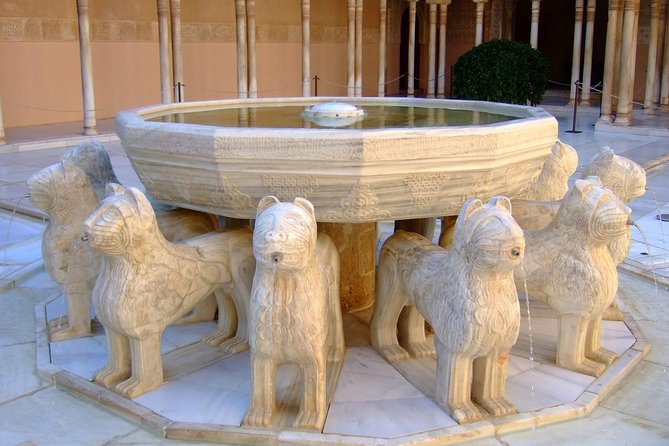
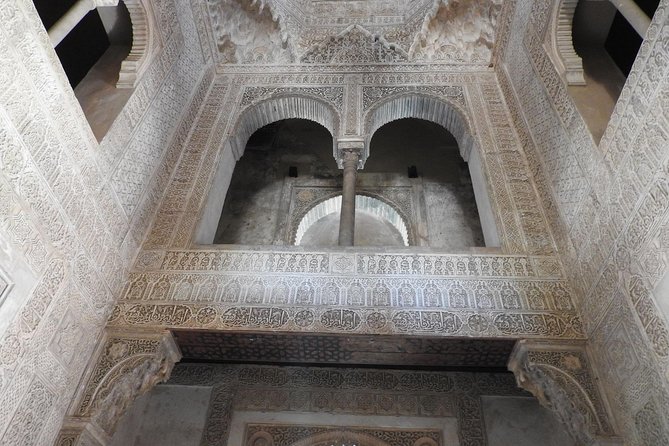
Your first stop is the Nasrid Palaces, royal palaces of the Nasrid Arab dynasty of Granada, dating from the 13th to the 15th centuries. This is the Alhambra people picture: interior design that feels like it’s speaking through decoration.
What I like about starting here is simple: the palaces are the most intense part of the experience. If you save them for later, you risk getting “sight-seeing tired” and missing how much is going on in the details. Starting early helps you absorb the core idea: this wasn’t only a building. It was an environment shaped by those who lived and governed there.
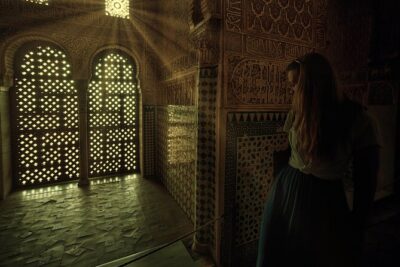
The tour’s emphasis on tiles and plasterwork is right on target. The surface work isn’t random ornament. It’s a kind of language—repetition, pattern, and light effects that change as you move. In your head, try to connect the visuals to daily rhythms: how sound carries in courtyards, how shade shifts through doorways, how your attention is guided from one framed space to the next.
Possible drawback: if you already know you love architecture but don’t care much about decorative symbolism, you may wish the explanations focused even more on structure and less on meaning. The tour is built to make the artistry click, so it’s best if you enjoy that translation from pattern to story.
Generalife gardens: the summer-palace feeling
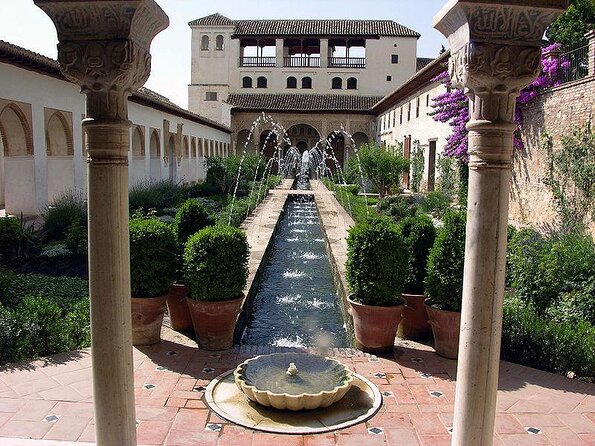
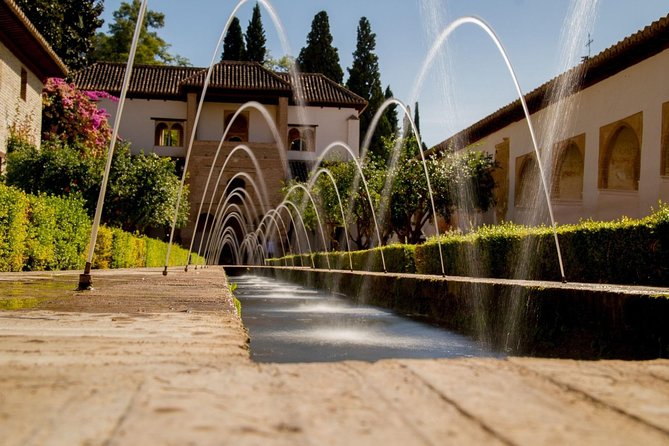
Next comes the Generalife, the summer palace of the Nasrid royalty, famous for its gardens. This stop acts like a breather after the intensity of the palaces. It’s also where the Alhambra’s design logic feels more human: plants, water, paths, and open-air composition change the way you experience time.
I like this pairing because it shows the Alhambra isn’t one mood. The palace areas are about crafted interior beauty. The Generalife shifts toward an outdoor idea of comfort—space that suggests leisure, retreat, and seasonal living. You get a different sense of what the palatine city was: not just a seat of power, but a lived-in landscape.
The gardens also support the tour’s sensory angle. Even when you don’t get literal flavors or guided tastings (the info doesn’t promise that), you can still “work” with what you’re given: notice scents in the air, listen for sound changes in open spaces, and watch how the garden layout guides your movement. Those small observations help the whole complex stop feeling like a checklist.
What to watch for: don’t race through. Slow down at viewpoints and path turns. In a garden, your position changes the scene, and that makes the experience more than a quick look.


Alcazaba: understanding the defensive side
Then you move to the Alcazaba, the military fort section that guarded the defense and other functions of the enclosure. This stop is a useful correction. Many visitors remember the Alhambra as pure elegance, but its protective purpose is part of the story.
The value of including the Alcazaba is context. Once you’ve seen the courtly spaces of the Nasrid Palaces and the leisure-focused Generalife, the fort area helps you balance the picture. You can start to understand how power was organized and protected, not just displayed.
In your mind, try to connect the “look” to the “job.” Defensive architecture often reads differently once you’ve already seen what it was meant to shelter. From there, the placement and function start to make more sense. Even without getting technical, you can feel the change in atmosphere: more about protection and control, less about seasonal pleasure.
Possible drawback: if you came only for interiors and gardens, the Alcazaba might feel less visually dramatic. But as a complete Alhambra day, it makes the whole complex feel more real and less like a set of pretty rooms.
How the private-group format changes what you notice
A big part of why this tour earns a 5-star rating isn’t just that it’s private. It’s the attention you get while you’re inside a place that can overwhelm your senses.
The concept limits the group to a maximum of 8 travelers. That number matters. It keeps your guide from rushing to “cover content” and lets you ask the practical questions that usually come up mid-visit, like how to read what you’re seeing, what mattered most, and how the spaces connected as one system.
The reviews highlight a strong guide experience. One named example is Eva from Balea Travel, described as phenomenal, with the kind of clarity that makes secrets and history feel understandable rather than heavy. You don’t need a degree in art history to benefit. You just need someone to point at the right things and give you a framework you can remember.
Here’s the practical reason this format helps: at the Alhambra, timing is constrained by ticket rules and site management. If you’re with a small group and a guide knows the flow, you spend less time figuring out where to go next and more time looking closely at what you’re standing in front of.
Timing, tickets, and the reality of regulated entry
This tour runs for about 3 hours. Tickets for the included areas are marked as included, but access is still subject to availability by the Alhambra board due to new regulations. That’s not a small footnote—it directly impacts how smooth your day will feel.
Because the exact time may vary, treat your visit like an anchored plan and not a flexible sightseeing block. Build in buffer time before and after so you’re not stressed if your entry slot shifts. If you’re planning dinner or a long bus ride afterward, aim for a comfortable margin.
Another point I’d flag: you’ll have to provide the name and surname and ID number or passport for all visitors at booking. That’s normal for regulated sites, but it’s something you want ready up front so your confirmation isn’t delayed.
What I’d do differently to get the most in 3 hours
You can absolutely enjoy the Alhambra at your own pace, but if you take this tour, you’ll get more by planning like a minimalist.
- Start early in your day mindset. The first palace areas are the most information-dense.
- Look first, listen second. Let your eyes catch patterns; then let the guide help you interpret them.
- Take a slow lap in your head, not your feet. Don’t physically keep retracing paths—use short pauses to reset.
- Ask one question per stop. With a small group, questions don’t derail the whole schedule.
This isn’t the kind of tour where you want to “collect photos.” It’s better as a meaning-collection session. The sensory prompt—thinking in aromas, flavors, and sounds—makes the experience stick because you’re turning the visuals into a memory.
Who this Alhambra daytime tour suits best
This tour is a strong match if you want an Alhambra visit that feels structured but not chaotic.
It’s ideal for:
- Couples or small groups who want the experience of a private tour without a huge group crowd
- Travelers who love architecture, tiles, plasterwork, and garden design and want context fast
- People who appreciate a guide who helps you connect what you see to how the place worked
- Visitors who want a clear three-stop route and don’t want to spend time juggling admissions
It might not be perfect if you:
- Prefer long solo wandering with no schedule pressure
- Know you dislike guided storytelling and prefer self-directed interpretation
- Need a very flexible pace, since it covers three main areas in roughly 3 hours
Should you book Balea Travel’s Alhambra daytime visit?
If you’re trying to decide, I’d book when these are true for you: you want the best highlights without losing a full day, you value a maximum 8-person atmosphere, and you like interpretation that turns decoration into understanding. The price makes sense in context because tickets are included for the main areas and the route is tight enough to keep the day smooth.
I’d especially recommend it if you care about getting the Alhambra’s dual personality: courtly palace beauty plus the fortified reality of the Alcazaba, with the Generalife gardens as the emotional balance point. That three-part rhythm is exactly what makes a short Alhambra day feel complete.
The only reasons to hesitate are the regulated entry timing (which can shift) and the non-flexible nature of access once you book. If you can roll with that, this is the kind of Alhambra visit you’ll remember as more than a set of landmarks.
FAQ
How long is the Alhambra daytime visit?
It’s about 3 hours.
How many people are in the group?
The tour is limited to a maximum of 8 travelers.
Where do we meet, and does the tour end nearby?
You meet at the Alhambra Ticket Office (P.º de la Sabica, 1f, Centro, 18009 Granada, Spain). The tour ends back at the meeting point.
Which areas are included in the visit?
You visit the Nasrid Palaces, the Generalife, and the Alcazaba.
Are admission tickets included?
Yes. Admission tickets for the listed stops are included.
What should I bring or prepare when booking?
You must provide each visitor’s name and surname plus an ID number or passport details at booking.
Is there a cancellation change option?
No. The experience is non-refundable and cannot be changed for any reason.
Just added to our Granada notebook
- Antequera and Torcal from Granada in a small group up to 7 people★ 4.5 · 3 reviews
- Granada: Alhambra tickets and other attractions★ 5.0 · 3 reviews
- Alhambra and Albaycin Private Tour★ 3.5 · 3 reviews
- Alhambra and Albaicin Private Tour with official Guide★ 3.5 · 3 reviews
- Cathedral and Royal Chapel Premium tour★ 4.5 · 3 reviews